
Pruning
That first green shoot from your fiddle leaf fig cutting means you’ve cracked the code. ✨ Propagating fiddle leaf figs feels like magic—until you know the right timing, tools, and patience tricks that turn stubborn stems into thriving new plants.
Spring and early summer are your best bets, when the plant’s energy is high and humidity levels play nicely. You’ll need sharp pruners, a clean jar or pot, and either water or a well-draining soil mix—no fancy equipment, just the right approach.
Most failures come from impatience or ignoring the humidity factor.
Within 4-6 weeks, you’ll see roots forming in water or soil, and those first leaves unfurling mean success. The key is keeping things warm, slightly moist, and out of drafts—your new plant will reward you with bold, glossy foliage that rivals its parent.
Works for both beginners and seasoned growers—just adjust the method to your space. Here’s how to avoid the common pitfalls and get results every time.
📚 In This Guide
- What you need
- Instructions
- Tips and common mistakes
- Wrapping up and next steps
What you need
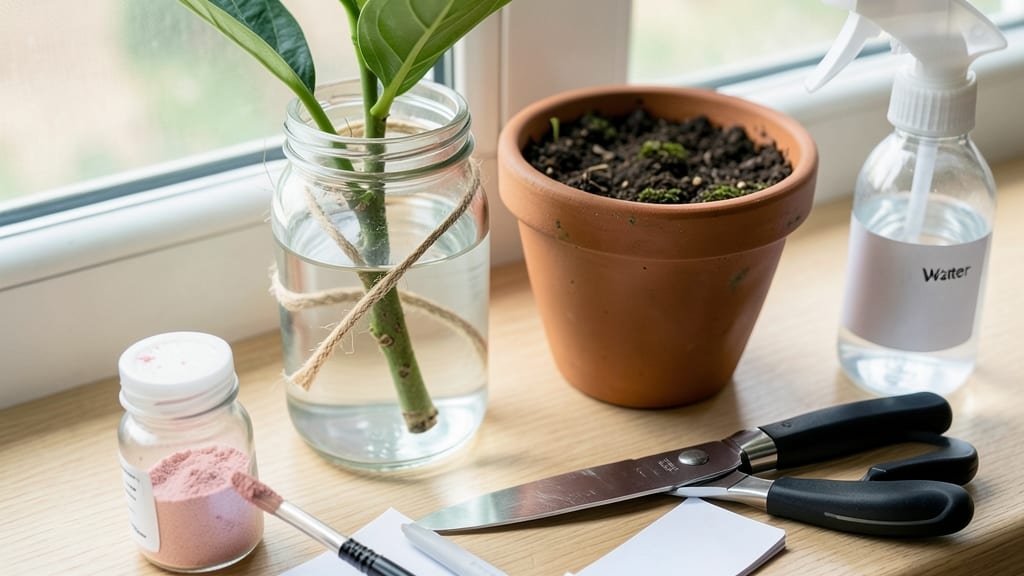
- ● Healthy fiddle leaf fig cuttings: 4–6-inch stems with at least 2–3 nodes (growth points) and 2–3 leaves. Use sterilized pruning shears for clean cuts.
- ○ Rooting hormone (optional but helpful): A small jar (1 oz) of powdered or gel-based rooting hormone (e.g., Clonex or Dyna-Gro).
- ● Water propagation: Clear glass or jar (8–12 oz) for visibility.
- ● Filtered or room-temperature water (change every 3–5 days).
- ● Soil propagation: Well-draining potting mix (e.g., cactus/succulent blend or perlite + peat moss mix).
- ● Small pots (3–4 inches in diameter) with drainage holes.
- ○ Humidity dome or plastic bag (optional): To retain moisture during soil propagation.
- ○ Spray bottle (optional): For misting soil or cuttings.
- ○ Labels & markers (optional): To track propagation dates!
Step-by-Step instructions for propagating fiddle leaf figs
Here's the simple method I use to grow new fiddle leaf fig plants—whether in water or soil.
🌱 Step 1: Select Healthy Stems for Propagation
Choose stems with at least 4-5 mature leaves and a node (the small bump where leaves attach). Healthy stems should feel firm, not mushy, and have vibrant green leaves. I always pick stems from the top of the plant, just below a leaf node—this is where roots will sprout most reliably.
Use clean, sharp pruning shears to make a 45-degree angle cut about ½ inch below a node. This angled cut gives the stem more surface area to absorb moisture and encourages faster root growth. Avoid cutting too close to the node or you'll limit root development.
💧 Step 2: Prepare the Stem for Root Growth
If propagating in water, place the stem in a clean glass or jar filled with room-temperature water that covers the node but not the leaves. Change the water every 3-5 days to prevent bacterial growth. You'll see tiny white roots emerge from the node in about 2-4 weeks.
For soil propagation, dip the cut end in rooting hormone powder (optional but helpful) and plant it in a small pot filled with well-draining cactus or succulent mix. Water lightly until the soil is just moist, then place the pot in a warm, bright spot with indirect light. Roots will start forming in about 4-6 weeks.
☀️ Step 3: Provide Ideal Growing Conditions
Keep your cuttings in a warm spot with bright, indirect light. Direct sunlight can scorch new leaves, while too little light slows root growth. I place mine near an east-facing window where they get gentle morning sun. If using water propagation, avoid placing the jar in direct sunlight—it encourages algae growth.
Maintain a consistent temperature of 65-75°F. Fiddle leaf figs are sensitive to temperature fluctuations, so avoid drafts or heating vents. Mist the leaves lightly once a week to maintain humidity, but avoid soaking the leaves—this can cause rot.
✂️ Step 4: Monitor and Transplant When Ready
For water propagation, wait until roots are at least 2-3 inches long before transplanting. You'll see new leaves emerging as a sign that the plant is establishing itself. For soil propagation, gently tug on the stem—if you feel resistance, roots have formed.
When transplanting, use a pot that's only 1-2 inches larger than the root ball to prevent overwatering. Fill with fresh potting mix and water lightly. Keep the new plant in bright, indirect light for the first week to help it adjust.
🌿 Step 5: Care for Your New Fiddle Leaf Fig
Once established, water your new fiddle leaf fig when the top 1-2 inches of soil feel dry. Overwatering is the biggest killer of young plants, so always check moisture levels before watering. Use a pot with drainage holes to prevent root rot.
Fertilize lightly every 2-3 months with a balanced liquid fertilizer during the growing season (spring and summer). Avoid fertilizing in fall or winter when the plant is dormant. You'll know your new plant is thriving when it grows new leaves consistently and the stems remain sturdy.
Tips & tricks for propagating fiddle leaf figs
Here's what nobody tells you about growing fiddle leaf fig cuttings—these tricks make all the difference between success and disappointment.
Node Selection is Everything: In Step 1, focus on stems with at least 4-5 mature leaves AND a node that's clearly visible and firm to the touch. I've tried stems with weak nodes, and they either rot or refuse to root. Look for nodes that are slightly raised and have a healthy green color—these are your best bets for reliable root growth. The top of the plant always yields the most vigorous cuttings, so don't be afraid to trim back your mature plant for propagation material.
Water Quality Matters: When propagating in water (Step 2), use filtered or distilled water if possible—tap water can contain chlorine and minerals that inhibit root growth. I've noticed my cuttings develop roots faster when using filtered water, and they're less prone to bacterial growth. Change the water every 3-5 days as instructed, but also rinse the jar with a 50/50 water and white vinegar solution once a month to prevent algae buildup that can smother developing roots.
Light Balance is Critical: In Step 3, that "bright, indirect light" is more important than most people realize. I've seen cuttings fail because they were placed too close to a south-facing window (too intense) or too far from any light source (too weak). For water propagation, I use a simple LED grow light on a timer for 12 hours a day if natural light isn't sufficient. The goal is to keep leaves vibrant green—not yellow or brown—and encourage steady root development without stressing the plant.
Transplant Timing Secret: In Step 4, wait until roots reach at least 2-3 inches before transplanting from water to soil. I've made the mistake of transplanting too early, and the cuttings often struggle to adapt. When you see new leaves emerging (another sign of establishment), that's your best indicator it's time to move to soil. For soil propagation, the "gentle tug test" works perfectly—if you feel resistance, roots have formed and it's ready for its permanent home.
Pro Tips for Propogating Fiddle Leaf Fig
- Here's what nobody tells you about growing fiddle leaf fig cuttings—these tricks make all the difference between success and disappointment.
- Node Selection is Everything: In Step 1, focus on stems with at least 4-5 mature leaves AND a node that's clearly visible and firm to the touch.
- Water Quality Matters: When propagating in water (Step 2), use filtered or distilled water if possible—tap water can contain chlorine and minerals that inhibit root growth.
Frequently asked questions
Got questions about propagating your fiddle leaf fig? You're not alone!
Here are answers to the most common concerns—from timing to troubleshooting—so you can grow new plants with confidence.
What’s the best time of year to propagate a fiddle leaf fig?
The ideal window is spring or early summer (March–June). This aligns with the plant’s natural growth cycle, giving cuttings time to root before winter dormancy. Avoid fall/winter—lower light and temps slow rooting. Pro tip: If you must propagate later, use a grow light to mimic optimal conditions!
Can I propagate a fiddle leaf fig in water, or should I stick to soil?
Both work, but soil propagation has a higher success rate (60–80% vs. 30–50% for water). Water rooting can lead to rot or weak roots when transitioned to soil. If you try water, use filtered or distilled water and change it every 3–5 days. For soil, opt for a well-draining mix (perlite + peat).
How long does it take for fiddle leaf fig cuttings to root?
Patience is key! In soil, roots typically form in 4–8 weeks, while water-rooted cuttings may take 6–12 weeks. Check for resistance when gently tugging the cutting—if it doesn’t slide out easily, roots are likely established. Speed it up: Mist cuttings daily and keep humidity high (a plastic bag works!).
Why is my cutting turning yellow or mushy after propagation?
Yellowing or mushiness signals overwatering, rot, or stress. Common culprits:
- Too much water: Let soil dry slightly between waterings (stick your finger in—top inch should be dry).
- Poor drainage: Ensure pots have drainage holes and use a chunky soil mix.
- Bacterial/fungal infection: Trim mushy areas with sterile scissors, dust with cinnamon powder, and repot in fresh soil.
Can I propagate a fiddle leaf fig from a leaf cutting?
Nope! Fiddle leaf figs cannot root from single leaves—they need a node (leaf joint) with a few leaves to propagate successfully. Aim for a 4–6 inch cutting with at least 2–3 nodes. Bonus: Larger cuttings with more leaves = faster growth and higher survival rates.
Wrapping up and next steps
Propagating your fiddle leaf fig is a rewarding journey—whether you choose water or soil, patience and care will yield stunning results! 🌱 With the right tools, techniques, and a little green thumb, you’ll soon be sharing cuttings with fellow plant lovers.
Ready to expand your collection? Start with just one cutting today—your future fig family awaits!
- Next step: Pick a healthy stem, follow your preferred method, and monitor progress weekly.
- Pro tip: Document your journey with photos to track growth and celebrate milestones!