
Pests and Diseases
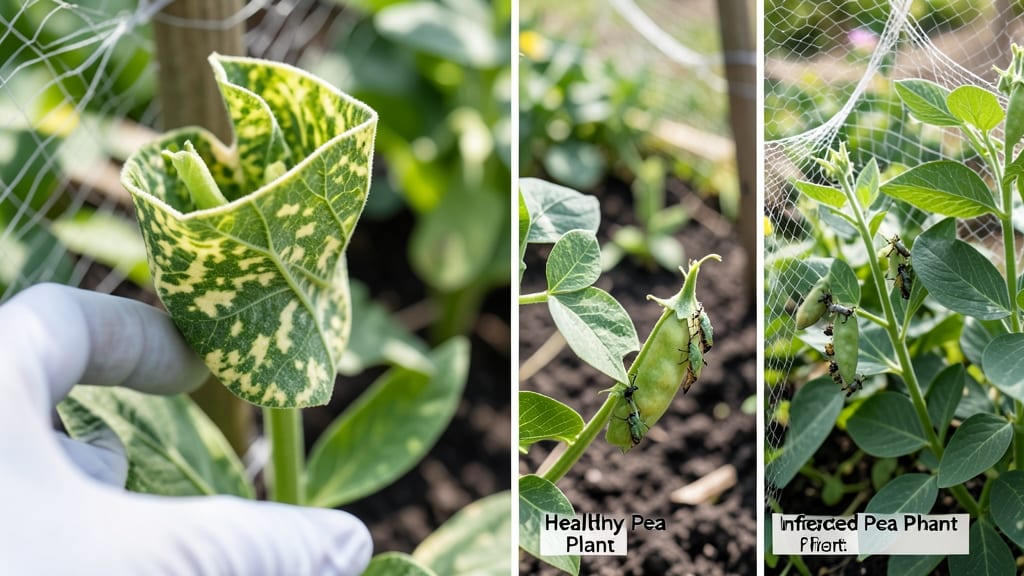
When your pea plants develop stunted growth and curled leaves, pea leaf roll virus might be the culprit—and the damage spreads fast. 🌱 I’ve seen this stubborn virus ruin entire pea harvests, but there’s hope with the right organic approach.
The key is catching it early, removing infected plants, and strengthening your peas’ defenses before next season.
This virus thrives when aphids feed on infected plants, carrying it from one pea to another. Once symptoms appear—yellowing, rolling leaves, and stunted stems—it’s already too late for those plants. The good news? Healthy soil, companion planting with chives or nasturtiums, and regular aphid monitoring can dramatically reduce your risk.
You’ll learn how to identify infected plants within days, use neem oil sprays as a preventive barrier, and rotate crops to break the virus cycle. With these steps, your next pea harvest can stay lush, productive, and free of those frustrating curls.
Even if you’ve lost plants before, this guide gives you practical tools to protect your garden long-term. Let’s get those peas growing strong again—without the virus.
How Viruses Spread in Peas
Understanding pea leaf roll virus (PLRV) starts with recognizing how it infiltrates crops. This persistent pathogen doesn’t just appear—it thrives due to a mix of biological, environmental, and agricultural factors.
Below, we break down the key reasons why pea plants fall victim, so you can take targeted action to prevent outbreaks.
The #1 culprit behind PLRV spread is the green peach aphid (Myzus persicae) and other aphid species. These tiny, sap-sucking insects act as viral vectors, carrying the virus from infected plants to healthy ones as they feed.
- How it works: Aphids acquire PLRV while feeding on infected pea plants. The virus replicates in their bodies and is then injected into new hosts during subsequent feedings. Just one aphid can transmit the virus in minutes.
- Key risk factors:
- High aphid populations (common in warm, humid conditions).
- Crops planted near alternative hosts like clover, alfalfa, or spinach, where aphids thrive.
- Wind or human activity (e.g., harvesting equipment) moving aphids between fields.
- Actionable tip: Monitor aphid activity early in the growing season. Use yellow sticky traps to track migrations and aphid-resistant pea varieties (e.g., 'Dakota' or 'Lincoln') to reduce transmission risks. 🎯
Unlike many viruses that die outside a host, PLRV can persist in plant debris and soil for years, waiting for the right conditions to reinfect crops. Additionally, some pea varieties carry the virus latently in their seeds, ensuring it’s passed to the next generation.
- How it works:
- Soil survival: The virus remains viable in root exudates or decaying plant material, especially in cool, moist soils. Rotating crops with non-host plants (e.g., corn or wheat) doesn’t always break the cycle because PLRV can survive in weeds like vetch or chickweed.
- Seed transmission: Infected seeds may not show symptoms but can germinate into virus-carriers. Rates vary by variety, but some studies show up to 5–10% transmission.
- Key risk factors:
- Monoculture farming (planting peas in the same field year after year).
- Poor sanitation (leaving infected plant residue in the field).
- Using seed from unknown or symptomatic plants.
- Actionable tip:
- Rotate crops with non-legume hosts (e.g., brassicas or cereals) for at least 3–4 years to starve out soil-borne virus particles. ✨
- Test seeds for PLRV before planting using ELISA (enzyme-linked immunosorbent assay) kits or submit samples to a plant pathology lab.
- Practice deep plowing to bury infected debris below the root zone.
PLRV doesn’t spread randomly—it exploits specific weather patterns that boost aphid activity and virus survival. Understanding these conditions helps you predict and mitigate outbreaks proactively.
| Factor | How It Affects PLRV Spread | Actionable Adjustments |
|---|---|---|
| Mild winters | Aphids survive overwintering in weeds or crop residues, emerging earlier in spring to infect young pea plants. | Use cover crops like rye to smother weeds and reduce overwintering sites. 🌱 |
| Warm, humid springs | Accelerates aphid reproduction and virus transmission. PLRV spreads 2–3x faster in temps above 60°F (15°C). |
|
| Drought stress | Weakened plants are more susceptible to aphid feeding and viral uptake. | Irrigate strategically to maintain plant vigor, especially during flowering. 💡 |
Even the best-growing conditions can backfire if farming techniques inadvertently create a PLRV-friendly ecosystem. Small changes in how you manage your field can make a big difference.
- Over-reliance on synthetic pesticides:
While chemicals kill aphids, they can also disrupt natural predators (like ladybugs or lacewings), leading to aphid population explosions when sprays wear off. IPM (Integrated Pest Management) balances chemical use with biological controls.
- Late planting:
Peas sown after mid-April in temperate zones often coincide with peak aphid migrations, giving the virus more opportunities to spread.
- Poor field drainage:
Waterlogged soils stress pea plants, making them more attractive to aphids and reducing their ability to resist infection.
- Actionable tip:
- Adopt a diverse pest-control toolkit: Combine reflective mulches, aphid-resistant varieties, and beneficial insect releases.
- Plant trap crops (e.g., mustard or radish) around pea fields to lure aphids away.
- Test soil drainage and amend with organic matter to improve root health. 🌡️
Fixing and Preventing Leaf Roll Damage
Now that you understand the root causes of leaf roll issues in your peas—whether from viral infections, pests, or environmental stress—it’s time to take action. Below, we’ve mapped practical solutions to each common cause, along with prevention tips to keep your pea plants thriving.
If your peas show signs of leaf curling, stunting, or yellowing (classic symptoms of pea leaf roll virus or similar stress), don’t wait—act fast to stop the spread.
- 🔪 Cut out affected plants at the base (including roots) and dispose of them in sealed trash—do not compost them, as viruses can linger.
- 🧼 Sanitize tools with rubbing alcohol or a bleach solution (1 part bleach to 9 parts water) to prevent cross-contamination.
- 🌱 Quarantine healthy plants if nearby crops show symptoms, and monitor them closely for 2–3 weeks.
✨ Pro Tip: If you suspect a viral infection (like pea leaf roll virus), test a sample at your local cooperative extension office for confirmation before taking drastic measures.
Many leaf roll issues start with aphids, spider mites, or other sap-sucking pests that weaken plants and transmit viruses.
- 💦 Spray with soapy water (1 tsp mild dish soap + 1 quart water) to knock off aphids and mites.
Reapply every 3–5 days. - 🐝 Encourage beneficial insects like ladybugs, lacewings, and parasitic wasps—they eat pests naturally without harming your peas. - 🌿 Use row covers early in the season to block aphids before they infest plants. - 🌱 Rotate crops—avoid planting peas (or other legumes) in the same spot year after year to break pest cycles.
💡 Prevention Hack: Plant nasturtiums or marigolds near your peas—they repel aphids and attract predator insects!
Weak, stressed, or nutrient-deficient peas are vulnerable to diseases and pests. Boost their health to fight off leaf roll issues naturally.
- 💧 Water deeply but consistently—peas hate soggy roots but also wilting stress.
Aim for 1–1.5 inches of water per week. - 🌿 Mulch with straw or grass clippings to retain moisture, regulate soil temperature, and suppress weeds (which compete for nutrients). - 🍽️ Feed with organic fertilizers like compost, fish emulsion, or a balanced organic 5-5-5 fertilizer at planting and mid-season. - 🌿 Choose resistant varieties—some pea cultivars (like ‘Oregon Sugar Pod’ or ‘Green Arrow’) are bred to tolerate viruses better.
🌡️ Temperature Tip: Avoid planting peas in extreme heat (above 85°F)—they thrive in cool spring weather (50–70°F).
Poor soil health can weaken plants, making them susceptible to leaf roll problems.
- 📊 Get a soil test (available through local extension services) to check pH and nutrient levels.
Peas prefer pH 6.0–7.0. - 🪴 Amend soil with compost or aged manure if it’s too sandy or clay-heavy. - 🌱 Avoid over-fertilizing with nitrogen—too much can lead to lush but weak growth, inviting pests and diseases.
🎯 Long-Term Fix: Build healthy soil over time with cover crops like clover or vetch before planting peas.
Stop leaf roll issues before they start with these simple steps:
✅ Start with clean seeds—buy from reputable suppliers and soak in a 10% hydrogen peroxide solution (30 mins) to kill surface viruses. ✅ Rotate crops—don’t plant peas, beans, or other legumes in the same spot for at least 3 years. ✅ Remove garden debris in fall to eliminate overwintering pests and viruses. ✅ Plant early—cool-season peas are less stressed and more resistant to viral spread. ✅ Monitor regularly—check undersides of leaves for pests and act at the first sign of trouble.
By combining immediate fixes (removing infected plants, controlling pests) with long-term prevention (soil health, crop rotation, resistant varieties), you can minimize leaf roll damage and keep your pea harvests strong and healthy. 🌱💪
Frequently asked questions
What are the first signs of pea leaf roll virus in my garden?
Look for leaf curling and yellowing that starts at the leaf edges and moves inward. Infected plants will also show stunted growth and dwarfed leaves compared to healthy peas. The key is catching symptoms early—once aphids spread it, the virus becomes nearly impossible to eliminate from that plant.
Can I save infected pea plants once symptoms appear?
No, there's no cure for pea leaf roll virus. Once symptoms appear, the plant is already compromised. Remove it immediately (including roots) and dispose of it in sealed trash—not compost—to prevent spread. Healthy plants nearby should be monitored for 2-3 weeks and quarantined if needed.
How do I prevent aphids from spreading the virus next season?
Start with yellow sticky traps to monitor aphid activity early. Use neem oil sprays (every 7-10 days) and plant aphid-repelling companions like nasturtiums or chives near your peas. For long-term control, rotate crops with non-legumes for 3-4 years and test seeds for virus presence before planting.
Are there pea varieties that resist pea leaf roll virus?
Yes! Some varieties like 'Dakota' and 'Lincoln' show better resistance. Look for aphid-resistant labels when selecting seeds. While no variety is completely immune, these options significantly reduce infection risk when combined with good garden hygiene. Always pair resistant varieties with preventive measures like crop rotation.
Will my soil still be contaminated after removing infected plants?
Yes, the virus can persist in soil for years. Practice deep plowing to bury infected debris below the root zone and avoid planting peas or legumes in that spot for 3-4 seasons. Test soil health annually and amend with compost to strengthen plant defenses against future infections.