
Pruning
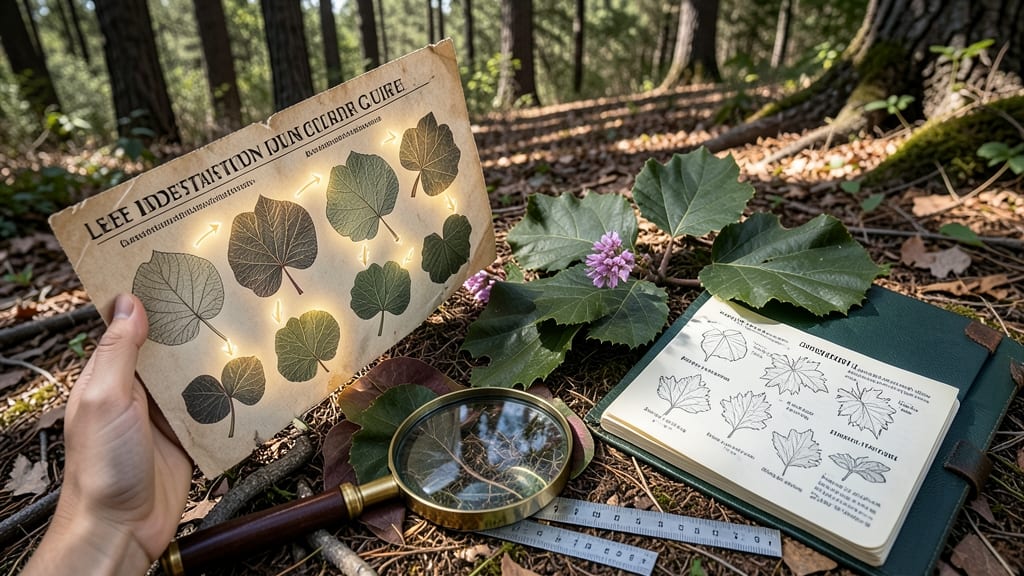
Mastering Oklahoma tree leaf identification saves you from guessing which pruning cuts are safe—or which pests to watch for. 🌳 I’ve spent years matching leaf shapes to backyard trees, and the patterns are shockingly distinct once you know what to look for: from the jagged edges of a bur oak to the smooth lobes of a sugar maple.
Start with three key traits: leaf shape (lobed, serrated, or smooth?), vein patterns (parallel or branching?), and arrangement (alternate or opposite?). My go-to trick? Hold a leaf up to a window—light reveals the subtle veins that separate similar species like redbud and honeylocust.
A magnifying glass helps spot tiny hairs or glandular dots that make all the difference.
Once you’ve nailed the ID, you’ll prune with confidence—cutting oak branches in late winter to avoid disease, or shaping maples for that signature layered look. You’ll also spot early signs of pests like lace bugs on sycamores or fungal spots on hackberries before they spread.
The right ID turns tree care from guesswork into a precise science.
For tricky cases, snap a photo and compare it to the Oklahoma State University Extension’s tree database or the free LeafSnap app. Local arboretums often host free identification workshops too—perfect for cross-checking your findings. Here’s how to spot the subtle clues that separate common lookalikes.
📚 In This Guide
- What you need
- Instructions
- Tips and common mistakes
- Wrapping up and next steps
What you need
- ● Field Guide or Smartphone App: A printed Oklahoma tree field guide (e.g., Trees of Oklahoma by Stan Tekiela) or
- ● A reliable app like LeafSnap, PictureThis, or iNaturalist (free/paid options available).
- ○ Hand Lens (Magnifier): 10x magnification (optional but helpful for fine details like vein patterns).
- ● Notebook & Pen: For sketching leaf shapes, noting colors, and jotting down observations.
- ● Measuring Tape or Ruler: A 12-inch tape measure or a metal ruler (for leaf length/width).
- ● Camera or Smartphone: With a high-resolution camera (at least 12MP) for close-up shots.
- ○ Gloves (Optional): Lightweight gardening gloves to protect hands from thorns or rough bark.
- ● Plastic Bags or Envelopes: 3–5 clear, sealable bags (quart-size) to preserve leaf samples.
- ● Pruning Shears (Sterilized): Small, sharp shears for safely snipping leaves (avoid damaging the tree!).
- ● Field Press (or Heavy Books): For flattening leaves between newspaper sheets if you’re creating a herbarium.
- ● UV Flashlight: To check for fluorescent patterns in leaves (some species glow under UV!).
- ● Weather-Resistant Backpack: To carry all your gear comfortably on hikes.
- ● Reference Books: Backup guides like National Audubon Society Field Guide to North American Trees.
Step-by-Step guide to Oklahoma tree leaf identification
Mastering leaf shapes and edges lets you spot trees anywhere in Oklahoma—no botanist degree required.
🌿 Step 1: Examine Leaf Shape and Margins
Start by holding the leaf against a bright background to see its outline clearly. Oklahoma trees often have simple leaves (single blade) or compound leaves (multiple leaflets). Look for key shapes: oval, lobed, needle-like, or palmate. Margins tell you just as much—smooth, serrated, or lobed edges narrow down your options fast.
I always check the leaf base—does it wrap around the stem (pinnate) or spread from a single point (palmate)? For example, American elm leaves have rough, jagged edges and a pointed tip, while southern magnolia leaves are leathery, elliptical, and smooth. Grab a notebook and sketch 3-4 key features of each leaf you find.
🌱 Step 2: Assess Leaf Arrangement and Venation
How leaves attach to the stem (alternate, opposite, or whorled) cuts your search in half. Oak leaves grow alternately along the branch, while maple leaves often appear opposite each other. Run your finger along the midrib—is the venation parallel (like pine needles) or branched (like most broadleaf trees)?
Here’s my trick: Tear a leaf—if it has a smooth edge, it’s likely a simple leaf (like hickory). If it fractures into smaller leaflets, it’s compound (like walnut). Black walnut leaves have 11-23 leaflets with a serrated edge, while pignut hickory has 5-7 leaflets with a smooth edge.
☀️ Step 3: Note Leaf Surface and Texture
Feel the leaf’s surface—is it smooth, fuzzy, or waxy? American sycamore leaves are sticky and rough, while redbud leaves are soft and hairy when young. Press the leaf between your fingers: thick, leathery leaves (like live oak) suggest drought tolerance, while thin, delicate leaves (like boxelder) mean the tree prefers moisture.
Check for aromatic qualities—some leaves (like sassafras) smell like root beer when crushed, while others (like eastern red cedar) have a piney scent. I keep a small field guide in my pocket to cross-reference smells and textures with known Oklahoma species.
📏 Step 4: Measure and Compare Key Dimensions
Grab a ruler or caliper and measure the leaf’s length and width. Pecan leaves are 8-12 inches long with 11-17 leaflets, while bitternut hickory leaves are 12-24 inches long with 7-19 leaflets. Note the leaflet spacing—are they close together (like black cherry) or spread out (like shagbark hickory)?
I always photograph the leaf from both sides with a reference object (like a coin) for scale. Apps like LeafSnap can help verify your findings, but I still trust my visual memory—after identifying 50+ trees, patterns stick. Compare your notes to a local field guide (like Trees of Oklahoma by B. Eugene Wofford) for confirmation.
✂️ Step 5: Cross-Reference with Seasonal Clues
Oklahoma’s four distinct seasons give extra hints. Spring leaves (like redbud) are often lighter green and fuzzy, while fall leaves (like sugar maple) turn vibrant red or orange. Check for bud shapes—round buds (like sycamore) vs. pointed buds (like elm). Even bark texture helps: smooth gray bark (like paper birch) vs. deeply furrowed bark (like bur oak).
I keep a seasonal checklist—in summer, I focus on leaf arrangement and venation; in fall, I prioritize color changes and bud shapes. If you’re unsure, collect a small branch (with permission) and press it in a dried leaf book for later study. Over time, you’ll recognize patterns without needing a guide.
Tips & tricks for mastering Oklahoma tree leaf identification
Field identification gets easier when you know what to look for—and what to ignore. Here's how to sharpen your skills without overcomplicating things.
Leaf Base is Your First Clue: In Step 1, when you examine leaf shapes, pay special attention to how the leaf attaches to the stem. I learned this the hard way—skipping leaf base observation led to misidentifying several hickory species as walnut. For example, pecan leaves have a pinnate base where leaflets attach along the stem, while sugar maple has a palmate base with all leaflets radiating from one point. This distinction alone cuts your options in half right away.
Texture Tells You More Than Color: Step 3's texture assessment is where many beginners miss key details. Don't just look at a leaf—touch it. The leathery texture of live oak leaves versus the delicate paper-thin quality of boxelder leaves reveals ecological clues. I keep a small magnifying glass in my field kit to examine leaf surfaces for hairs, wax coatings, or glandular dots that can be species-defining. For instance, redbud leaves feel velvety when young, while American sycamore leaves develop a sticky resin that's impossible to miss.
Photography Shortcut: When you photograph leaves in Step 4, include a coin or ruler in every shot—not just for scale, but to create a consistent reference. I use a quarter dollar (24mm diameter) because its size works for both small redbud leaves (2-4 inches) and large bitternut hickory leaves (up to 24 inches). Pro tip: Take photos in natural light against a white or gray background—this eliminates color variations from shadows and makes digital comparisons easier later. I've identified dozens of trees just by comparing my photos to field guides.
Seasonal Adaptation Strategy: Oklahoma's seasonal variations mean you'll need different approaches. In spring, focus on bud shapes and new leaf textures (Step 5). In fall, prioritize color changes and leaf arrangement patterns—many trees show their most distinctive colors when leaves first change. I maintain a seasonal checklist in my notebook: spring = buds and fuzzy leaves, summer = leaf arrangement, fall = color and venation, winter = bark and branch patterns. This systematic approach prevents seasonal blind spots.
Pro Tips for Oklahoma Tree Leaf Identification
- Field identification gets easier when you know what to look for—and what to ignore.
- Leaf Base is Your First Clue: In Step 1, when you examine leaf shapes, pay special attention to how the leaf attaches to the stem.
- Texture Tells You More Than Color: Step 3's texture assessment is where many beginners miss key details.
Frequently asked questions
Got questions about identifying Oklahoma tree leaves? You’re not alone! Here are some of the most common queries—and their answers—to help you navigate the green canopy with confidence.
How do I tell the difference between oak and maple leaves?
Oak leaves are lobed but jagged with rounded or pointed tips (like a bramble), while maple leaves have smooth, pointed lobes that resemble fingers or a hand. Check the edges—oaks are rougher, and maples are often glossier. Pro tip: Rub a leaf between your fingers—maple leaves feel smoother!
What’s the best time of year to identify tree leaves?
Late spring through early summer (May–July) is ideal! Leaves are fully grown, vibrant, and easy to spot. Avoid fall—colors change, and leaves may drop. Early morning is best: dew keeps leaves crisp, and sunlight highlights details. Skip winter unless you’re spotting evergreens!
Can I use an app to identify tree leaves in Oklahoma?
Apps like LeafSnap, PictureThis, or iNaturalist let you upload photos for instant ID. For Oklahoma, focus on leaf shape, vein pattern, and bark texture—apps use these clues. Pro tip: Snap a photo of the whole tree (not just leaves) for better accuracy.
What if my tree’s leaves look weird—could it be diseased?
Yellowing, spots, or holes? It might be disease, pests, or nutrient issues. Compare your findings to the Oklahoma State University Extension’s plant clinic guide. First steps: Check the underside of leaves for pests, then snap a photo for a local arborist’s opinion.
Do I need special tools to measure leaf size for ID?
Not at all! A ruler or even a credit card works—just line up the leaf’s longest point. Most Oklahoma native leaves range from 1–6 inches long. Quick hack: Use your thumb and pinky (spread wide) as a ~2-inch reference for small leaves.
Wrapping up and next steps
Identifying Oklahoma’s trees by their leaves is a rewarding way to connect with nature—whether you're a gardener, hiker, or just curious! 🌿 With this visual guide, you’ve now got the tools to recognize 15 common species like a pro. Next up? Grab your magnifying glass and explore your neighborhood or local parks—you’ll be spotting oaks, elms, and maples in no time.
For deeper dives, consider downloading a tree ID app or joining a local botanical group. Happy exploring—and may your leaf adventures be evergreen! 🌳