
Pruning
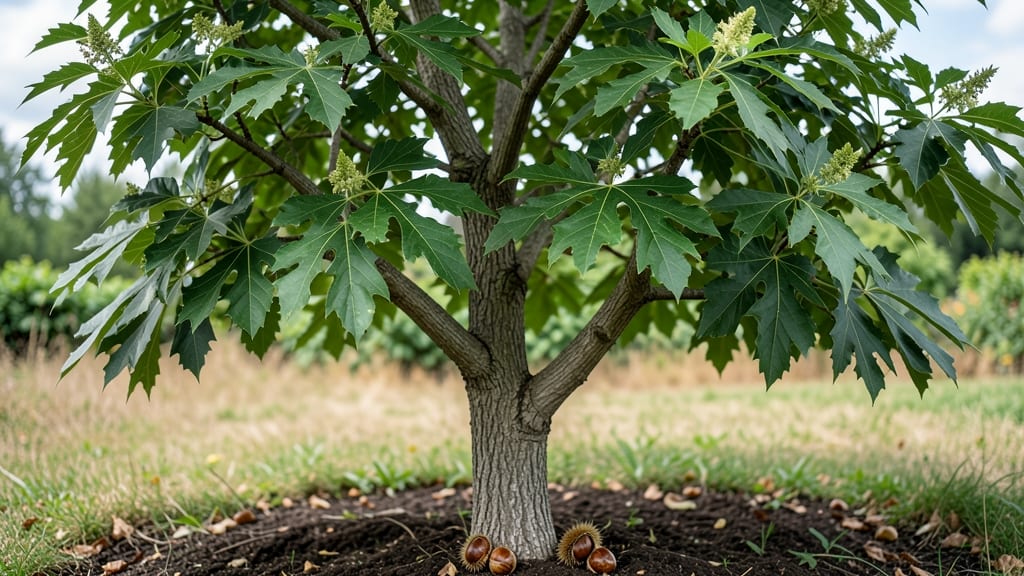
That first crispy brown edge on the Ohio buckeye tree leaf isn’t a death sentence—it’s a pruning cue. 🌿 The Ohio buckeye (Aesculus glabra) thrives when you understand its leaf language: palmate shapes with 5-7 fingers, glossy green in summer, and fiery gold in fall.
But those ragged edges? They’re begging for a trim before they spread.
This tree loves full sun and well-draining soil, but its real secret is seasonal pruning. Cut back crispy edges in late winter or early spring—just as new growth starts—to encourage fresh, vibrant foliage.
The key is timing: prune after the last frost but before leaves emerge, and always use clean, sharp tools to avoid tearing.
What you’ll end up with is a tree that looks healthier than ever—thicker canopy, fewer pests, and those signature buckeye leaves staying lush longer.
Plus, you’ll avoid confusing it with toxic look-alikes like horse chestnut by memorizing those 5-7 leaflets (horse chestnut has 5-7 too, but buckeye’s leaves are slightly hairier when young).
Bonus: Ohio buckeyes support wildlife and add cultural charm to landscapes. Their nuts feed squirrels, and their fall color is a showstopper. Now, grab those shears—your tree’s revival starts with one simple cut.
📚 In This Guide
- What you need
- Instructions
- Tips and common mistakes
- Wrapping up and next steps
What you need
- ○ Pruning shears: Bypass pruners (sharp, clean, and sterilized with rubbing alcohol). Optional: Loppers (for thicker branches, 1.5"–2" cutting capacity).
- ● Hand saw: Curved-tooth pruning saw (for branches >2" thick). Pro tip: 💡 Oil the blade beforehand for smoother cuts!
- ● Disposable gloves: Nitrile or leather (to protect against thorns and sap).
- ● Rubbing alcohol (70%+) or bleach solution: 1 part bleach to 9 parts water (for sterilizing tools between cuts).
- ○ Pruning sealant: Tree wound sealant (optional but helpful for large cuts >0.5" diameter).
- ● Ladder or step stool: Sturdy, extendable (if tree exceeds 6 ft tall). Safety first!
- ● Bucket or trash bag: For collecting pruned branches.
- ● Notebook & pencil: To map out cuts and track progress.
- ● Timing: Late winter/early spring (just before buds swell) or mid-summer (after flowering). Avoid pruning in fall or during Ohio’s harsh winters. ✨
- ● Weather: Overcast day or early morning (reduces stress on the tree).
- ● Tools check: Ensure all blades are sharp—dull tools crush rather than cleanly cut, inviting disease.
- ● Magnifying glass (to inspect buds and early signs of pests/disease).
- ● Spray bottle with water (to mist tools and branches during hot days).
- ● Camera or phone (to document “before” and “after” pruning for tracking growth).
- ● Tree growth regulator (if reviving a severely stressed buckeye—consult a local Ohio nursery for recommendations).
How to revive Ohio buckeye leaves with strategic pruning
Crispy, brown edges on Ohio buckeye leaves aren't a death sentence—they're a signal your tree needs targeted care. Here's how to diagnose and fix the issue using proven pruning techniques.
☀️ Step 1: Assess the Damage and Identify the Cause
Examine the leaves closely—crispy edges on Ohio buckeye (Aesculus glabra) typically result from environmental stress rather than disease. Check for these key indicators: uniform browning along leaf margins suggests underwatering or low humidity, while irregular brown patches point to overwatering or fungal pressure. This tree thrives in full sun to partial shade, so insufficient light often triggers the problem.
Run your finger along the leaf edges—if they feel dry and papery rather than leathery, you're dealing with moisture stress. Ohio buckeyes need well-draining soil and consistent watering during their first two growing seasons. Mature trees develop deeper root systems, but crispy edges usually mean the roots aren't accessing water efficiently yet.
✂️ Step 2: Prune for Airflow and Light Penetration
Use clean, sharp pruning shears to remove 1/3 of the crispy-edged leaves from each branch. Focus on the outer canopy first—this improves airflow and reduces humidity buildup that worsens browning. Cut just above a healthy leaf node (the small bump where leaves attach) to encourage new growth. Never remove more than 25% of the foliage in one session, as this stresses the tree further.
Look for crossing branches or dense clusters where leaves rub together—these areas trap moisture and promote fungal growth. Remove one of the crossing branches entirely, cutting back to the trunk or a strong lateral branch. Thin the canopy by 10-15% total to let sunlight reach the inner leaves. You'll see new, vibrant growth within 4-6 weeks if the root system is healthy.
💧 Step 3: Adjust Watering and Soil Conditions
Water deeply once weekly during dry spells, aiming for 1-1.5 inches of water per application. Check soil moisture by pushing your finger 2-3 inches deepwell-amended soil with organic matter. Spread a 2-3 inch layer of mulch around the base (keeping it 6 inches away from the trunk) to retain moisture and regulate temperature.
If your tree is in a container, repot into a larger vessel if roots are circling the bottom. Ohio buckeyes need at least 24 inches of root space to support their canopy. For ground-planted trees, test soil drainage—if water pools after 24 hours, amend with sand or perlite to improve aeration. You'll notice leaves softening and regaining color within 2-3 weeks of proper watering.
🌿 Step 4: Fertilize for Leaf Health
Apply a balanced fertilizer (10-10-10) in early spring and again after pruning, following package rates. Ohio buckeyes respond well to organic options like composted manure or fish emulsion, which provide slow-release nutrients. Avoid high-nitrogen fertilizers—they promote leaf growth at the expense of root development, worsening crispy edges long-term.
Look for these signs of improvement: new leaves emerging with smooth edges and existing leaves developing a deeper green hue. If brown edges persist after 6-8 weeks, your tree may need a soil test to check pH and nutrient levels. Ohio buckeyes prefer slightly acidic to neutral soil (pH 6.0-7.0)—adjust with lime or sulfur as needed based on test results.
⏰ Step 5: Monitor and Maintain Seasonal Care
Continue pruning lightly in late winter to remove any new crispy-edged growth, always cutting just above a healthy bud. This encourages the tree to redirect energy to producing fresh foliage. In fall, reduce watering gradually as temperatures drop—Ohio buckeyes enter dormancy when soil temperatures fall below 50°F, and overwatering at this stage causes winter damage.
Watch for secondary issues like spider mites or scale insects, which thrive on stressed trees. Treat infestations immediately with horticultural oil or insecticidal soap. A healthy Ohio buckeye should show full, glossy leaves by mid-summer with minimal browning. If crispy edges reappear, revisit your watering schedule and pruning technique—consistency is key to long-term leaf health.
Tips & tricks for reviving Ohio buckeye leaves
Between us, I've seen crispy-edged Ohio buckeye leaves turn around completely with these targeted strategies—here's what nobody tells you about making it work.
Diagnostic Precision: The difference between fixing crispy edges and making things worse often comes down to this: uniform browning means moisture stress (water more deeply), while irregular patches mean overwatering (let soil dry slightly between waterings). I always check leaf texture—papery edges need hydration, leathery edges need airflow. This simple test saves hours of guesswork.
Pruning Technique: When removing those 1/3 of crispy-edged leaves in Step 2, focus on the outer canopy first—this creates a "chimney effect" that pulls air upward through the tree. I cut just above a healthy bud, never at a node, because the tree needs that growth signal. Pro move: Use a sterilized alcohol wipe on your pruners between cuts to prevent spreading any potential fungal spores hiding in those crispy leaves.
Soil Science: That 2-3 inch mulch layer isn't just decoration—it's a moisture regulator. I spread it 6 inches from the trunk to prevent rot while keeping roots cool. For container-grown Ohio buckeyes, I always check for root circling before repotting—if roots are growing in tight circles, they'll never access water properly, no matter how much you water. This is why so many potted buckeyes develop crispy edges.
Seasonal Timing: The 50°F soil temperature threshold for dormancy is non-negotiable. I use a soil thermometer in fall to track this—when temps drop below 50°F, I reduce watering by 50% immediately. Overwatering at this stage is what causes those dreaded winter crispy edges that seem impossible to fix. Think of it as the tree's "off switch"—respect it.
Pro Tips for Ohio Buckeye Tree Leaf
- Between us, I've seen crispy-edged Ohio buckeye leaves turn around completely with these targeted strategies—here's what nobody tells you about making it work.
- I always check leaf texture—papery edges need hydration, leathery edges need airflow.
- Pruning Technique: When removing those 1/3 of crispy-edged leaves in Step 2, focus on the outer canopy first—this creates a "chimney effect" that pulls air upward through the tree.
Frequently asked questions
Got questions about growing and pruning Ohio Buckeye tree leaves?
You’re not alone! Here are some of the most common queries—and their answers—to help you keep your tree thriving.
When is the best time to prune Ohio Buckeye trees for leaf health?
The ideal time to prune is late winter or early spring (before buds break) or summer after flowering. Avoid pruning in fall or winter when the tree is dormant, as this can stress it. Pruning too late in the season may also encourage new growth that won’t harden off before cold weather.
How do I fix crispy or brown edges on Buckeye leaves?
Crispy edges often signal underwatering, over-salinity, or environmental stress. First, check soil moisture—water deeply when the top 1-2 inches are dry. If your tree is potted, ensure proper drainage. For outdoor trees, mulch around the base to retain moisture. If the issue persists, test soil pH (ideal: 6.0–7.5) and adjust with lime or sulfur if needed.
Can I propagate Ohio Buckeye trees from cuttings?
Yes, but it’s challenging! Buckeyes are slow to root from cuttings. Use semi-hardwood cuttings (6–8 inches long) in early summer, dip in rooting hormone, and plant in a mix of perlite and peat moss. Keep humidity high with a plastic bag and maintain 70–75°F. Success rates improve with layering—bend a low branch to the ground, cover with soil, and wait for roots to form (1–2 years).
Why are my Buckeye leaves turning yellow in fall?
Yellowing in fall is normal—it’s the tree’s way of recycling nutrients before dormancy. However, if yellowing happens outside fall, check for:
- Overwatering: Yellow leaves with brown edges = root rot risk.
- Nutrient deficiency: Pale yellow? Test soil for nitrogen, iron, or magnesium.
- Pests/disease: Look for spots, holes, or webbing (aphids, spider mites).
Are Ohio Buckeye leaves toxic to pets or kids?
Yes!
All parts of the Ohio Buckeye tree (Aesculus glabra) contain esculin and saponins, which can cause vomiting, diarrhea, or skin irritation if ingested. Keep pets and children away from fallen leaves or chewed branches. If exposure occurs, contact a vet or poison control immediately. Always wear gloves when pruning to avoid skin contact.
Wrapping up and next steps
Reviving your Ohio buckeye tree with crisp, vibrant leaves is all about timing, technique, and tender care! 🌿 By mastering the art of pruning—whether it’s shaping for health, removing dead branches, or encouraging new growth—you’re not just trimming; you’re nurturing a legacy.
The buckeye’s resilience makes it a rewarding project, so grab those shears and get ready to watch your tree thrive.
Ready to take the next step? Start small—pick one branch to practice your cuts, then expand as confidence grows. And if you’re feeling ambitious, share your progress with fellow gardening enthusiasts for tips and inspiration!