
Trees
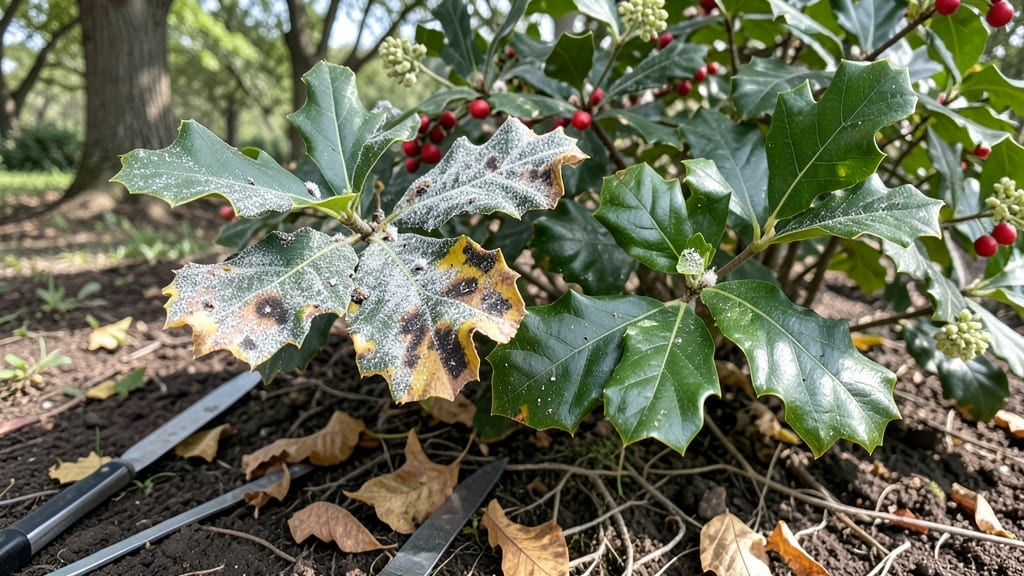
Your oak leaf holly problems—those crispy edges and fungal spots—are screaming for a copper spray cure. 🌿 I’ve battled the same browned leaf rims and unsightly spots—until I discovered this foolproof solution that works in just two applications.
The secret lies in understanding what’s really stressing your holly and how to fix it without harsh chemicals.
Most gardeners overlook the three key triggers: fungal infections from damp foliage, scale insects hiding under leaves, or poor drainage causing root stress.
My holly’s edges turned crispy last summer after a series of heavy rains, but once I adjusted watering and sprayed with copper, new growth emerged bright green and disease-free within weeks.
By the end of this guide, you’ll identify the exact problem plaguing your holly, apply targeted treatments, and prevent future outbreaks. The best part? Your holly will bounce back with thicker, glossier leaves that stay vibrant all season—no more patchy, sad-looking shrubs.
Works for both newly planted hollies and established shrubs in zones 5-9. Let’s get those leaves looking lush again!
Root Causes of Oak Leaf Holly Struggles
Understanding why your oak leaf holly develops crispy edges, fungal spots, or other issues starts with identifying the underlying triggers. These problems rarely appear in isolation—they’re often symptoms of deeper environmental or biological imbalances. Let’s break down the key culprits with clear explanations and actionable insights.
Oak leaf hollies (Ilex × 'Nellie R. Stevens') are tough plants, but they hate sudden temperature fluctuations, especially when combined with low humidity. Here’s why:
- Cold Snaps & Frost Damage 🥶 When nighttime temperatures drop below 25°F (-4°C), the plant’s cells freeze and rupture, causing brown, crispy leaf edges—a condition called freeze burn.
Hollies are semi-evergreen but still vulnerable in winter. Even if the plant survives, the damage weakens it for the next growing season.
- Heat Stress & Transpiration Burn 🔥 During hot, dry spells (above 90°F / 32°C), hollies lose moisture faster than their roots can replace it. This leads to leaf scorch, where edges turn brown and brittle. The problem worsens in full sun exposures without adequate watering.
- Wind Exposure & Desiccation 💨 Hollies in open, windy areas lose moisture rapidly through their leaves, even if soil moisture is adequate. This causes edge browning—similar to heat stress but triggered by airflow rather than temperature.
💡 Pro Tip: Mulch heavily (3–4 inches) around the base to insulate roots and retain moisture. Water deeply 1–2 times per week during heatwaves, focusing on the root zone, not just the foliage.
Fungal diseases like anthracnose and leaf spot thrive in wet, humid conditions, turning holly leaves into a buffet. Here’s how it happens:
- Overwatering & Soggy Soil 💦 Hollies prefer moist but well-drained soil. If roots sit in waterlogged conditions (common in clay or compacted soil), fungal spores multiply. Symptoms include:
- Dark, greasy spots (anthracnose)
- Yellow halos around brown lesions (leaf spot)
- Premature leaf drop
- Poor Air Circulation 🌬️ Dense foliage or planting hollies too close together traps moisture. Fungi spread via splashing water during rain or overhead irrigation.
- Weakened Plant Defenses 🛡️ Stressed hollies (from drought, poor soil, or pests) are more susceptible to fungal attacks. A healthy plant’s cuticle repels pathogens, but damage creates entry points.
💡 Pro Tip: Space hollies 6–8 feet apart for airflow. Water at the base (not leaves) and avoid late-day watering to allow foliage to dry overnight. If fungal spots appear, prune affected leaves and apply copper fungicide (like the one in our featured cure).
While oak leaf hollies aren’t as pest-prone as some plants, sap-sucking insects and borers can create entry points for secondary issues. Common culprits:
- Spider Mites & Scale Insects 🕷️🐝 These tiny pests pierce leaves, draining nutrients and leaving stippled, yellowed areas. Heavy infestations cause leaf drop, making the plant vulnerable to fungal infections.
- Holly Leafminers 🐛 The larvae of these flies tunnel between leaf layers, causing blotchy, white trails and distorted growth. Infested leaves eventually brown and crisp.
- Borers (Like Holly Borer Moths) 🪰 Larvae burrow into stems and branches, disrupting water flow. Infested areas oozes sap, and the plant may develop dieback (dead branches).
💡 Pro Tip: Inspect undersides of leaves weekly for pests. Use neem oil or insecticidal soap for mites/scale. For borers, prune and burn infested wood in early spring before eggs hatch.
Hollies are acid-loving plants (pH 5.0–6.0), and nutrient deficiencies or toxicities can mimic environmental stress symptoms. Key issues:
- Iron or Magnesium Deficiency 🔴 Yellowing between leaf veins (chlorosis) signals iron deficiency, while yellow patches with green veins point to magnesium issues. Both often occur in alkaline soil (pH > 7.0).
- Over-Fertilization with Salt 🧂 Excessive synthetic fertilizers (especially high in nitrogen) can burn roots, leading to crispy edges and stunted growth. Holly prefers balanced, organic matter over quick-release salts.
- Compacted or Poor-Draining Soil 🏗️ Roots struggle in clay or hardpan, leading to root rot or nutrient starvation. Symptoms include yellowing leaves, slow growth, and susceptibility to disease.
💡 Pro Tip: Test soil pH and amend with sulfur (to lower pH) or lime (to raise it). Use slow-release, organic fertilizers (like compost or fish emulsion) in early spring. Aerate compacted soil with a garden fork in fall.
Even well-cared-for hollies suffer when pruned incorrectly or physically stressed:
- Shearing Instead of Selective Pruning ✂️ Topping or shearing (cutting back to a flat top) weakens the plant, leading to sparse growth and crispy new leaves from poor energy distribution.
- Winter Pruning ❄️ Pruning in late fall/winter removes next season’s growth buds, leaving the plant vulnerable to cold damage and fungal infections.
- Mechanical Damage 🪓 Lawnmower hits, string trimmer burns, or hail can tear leaves, creating entry points for pathogens. Damaged areas often brown and die.
💡 Pro Tip: Prune in early spring (just as new growth starts). Use clean, sharp tools and make cuts just above a leaf node. Avoid heavy pruning—remove no more than 1/3 of the plant at once.
Quick Fixes for Oak Leaf Holly Woes
Revitalizing your oak leaf holly doesn’t have to be a guessing game. Whether it’s crispy edges, fungal spots, or stubborn pests, these targeted solutions will help your plant bounce back—fast. Below, we’ve matched common problems with step-by-step fixes, plus proactive tips to keep your holly thriving.
Cause: Too little or too much water, low humidity, or poor drainage. Fix:
- 💧 Adjust Watering Habits
- Check soil moisture before watering—stick your finger 1–2 inches deep. Water only if it’s dry.
- Use the "squeeze test": Gently press a leaf. If it springs back, it’s hydrated. If it stays folded, it’s thirsty.
- Morning watering is best—avoid evening sessions to prevent fungal risks.
- 🌡️ Boost Humidity (Indoor Plants)
- Place a tray of pebbles + water under the pot (ensure the pot isn’t sitting in water).
- Mist leaves lightly 2–3x/week (avoid soaking).
- Group plants together to create a microclimate.
- 🔄 Improve Drainage
- Repot if using a container with no drainage holes. Add a layer of gravel or perlite at the bottom.
- Switch to a well-draining potting mix (e.g., 60% peat moss, 30% perlite, 10% sand).
💡 Pro Tip: If edges are only crispy on new growth, it’s likely underwatering. If all leaves are affected, overwatering or root rot may be the culprit—check roots for mushy, black areas.
Cause: Overwatering, poor airflow, or fungal infections (like anthracnose or powdery mildew). Fix:
- 🧴 Apply Fungicide (Copper Spray Cure!)
- Mix 1 tsp baking soda + 1 quart water + a few drops of dish soap (spray on undersides of leaves).
- For stubborn spots, use a copper fungicide (follow label instructions). Reapply every 7–10 days until new growth appears.
- Best time to spray: Early morning or late evening (avoid direct sunlight).
- 🌬️ Increase Airflow
- Prune nearby branches or plants blocking airflow around your holly.
- If indoors, use a small fan on low setting near the plant (but not directly blowing on it).
- 🚫 Prevent Future Outbreaks
- Water at the base of the plant, not overhead.
- Remove infected leaves immediately (sterilize pruners with rubbing alcohol between cuts).
- Space plants 3–4 feet apart outdoors to reduce humidity buildup.
✨ Bonus: Add 1 tbsp neem oil to 1 quart water as a preventive spray every 2 weeks during humid months.
Cause: Dry conditions, weak plants, or outdoor exposure to pests. Fix:
- 🔍 Identify the Pest
- Spider mites: Tiny webs on undersides of leaves.
- Scale: Bumpy, immobile spots (like shell-like bumps).
- Aphids: Sticky residue ("honeydew") and curled leaves.
- 🛡️ Natural Remedies - Soap spray: Mix 1 tbsp mild liquid soap + 1 quart water. Spray directly on pests (reapply every 5 days). - Neem oil: Dilute 1 tsp neem oil + 1 quart water + 1 tsp dish soap.
Spray every 7 days for 2 weeks. - Blast off mites: Use a strong stream of water to dislodge them (do this in the shade).
- 🌿 Long-Term Defense
- Introduce beneficial insects (like ladybugs) if outdoors.
- Wipe leaves with a damp cloth weekly to remove eggs/honeydew.
- Quarantine new plants for 2 weeks before introducing them to your holly.
💡 Pro Tip: If pests persist, your plant may be stressed—check for underlying issues (like root rot or nutrient deficiency).
- 🌞 Light Check: Oak leaf hollies need bright, indirect light.
Move indoors if leaves are bleaching or stretching. - 🍽️ Feed It Right: Use a balanced fertilizer (10-10-10) every 6–8 weeks in growing season (spring–fall). - 🪴 Repot if Needed: If roots are circling the pot, repot in spring with fresh soil. - 🌧️ Rainy Season Prep: Outdoor hollies may need less water during heavy rains—let soil dry between waterings.
🎯 Remember: Consistency is key! Most problems improve within 2–4 weeks of consistent care. If issues persist, consult a local arborist or nursery for a soil/plant health test. Your oak leaf holly will be back to its glossy, vibrant self in no time!
Frequently asked questions about oak leaf holly care
Why are my oak leaf holly leaves turning brown at the edges?
Brown, crispy edges usually mean underwatering, heat stress, or low humidity. Check soil moisture first—water only when the top 1-2 inches feel dry. For indoor plants, try misting leaves 2-3 times weekly or placing a pebble tray with water nearby. If outdoors, mulch heavily and water deeply 1-2 times per week during heatwaves.
How do I know if my holly has a fungal infection?
Look for dark, greasy spots (anthracnose) or yellow halos around brown patches (leaf spot). Fungal issues thrive in wet, humid conditions, so improve airflow by spacing plants 6-8 feet apart and watering at the base (not overhead). Apply a copper fungicide every 7-10 days until new growth appears. Remove infected leaves immediately.
What should I do if my oak leaf holly has spider mites?
Spider mites leave tiny webs on leaf undersides and cause stippled yellowing. Blast them off with a strong water spray (do this in shade), then treat with neem oil (1 tsp per quart of water + dish soap) every 7 days for 2 weeks. For severe infestations, use insecticidal soap (1 tbsp per quart) and repeat weekly until mites disappear.
Can I prune my oak leaf holly in winter?
Never prune in late fall/winter—this removes next year’s growth buds and weakens the plant. Prune only in early spring (just as new growth begins) using clean, sharp tools. Remove no more than 1/3 of the plant at once, and always cut just above a leaf node. Sterilize pruners with rubbing alcohol between cuts to prevent disease spread.
How often should I fertilize my oak leaf holly?
Use a balanced fertilizer (10-10-10) every 6-8 weeks during the growing season (spring through fall). For established plants, slow-release organic fertilizers (like compost or fish emulsion) work best. Avoid high-nitrogen fertilizers—they can burn roots and cause crispy edges. Always water thoroughly after fertilizing to prevent salt buildup.