
Leaf Blower
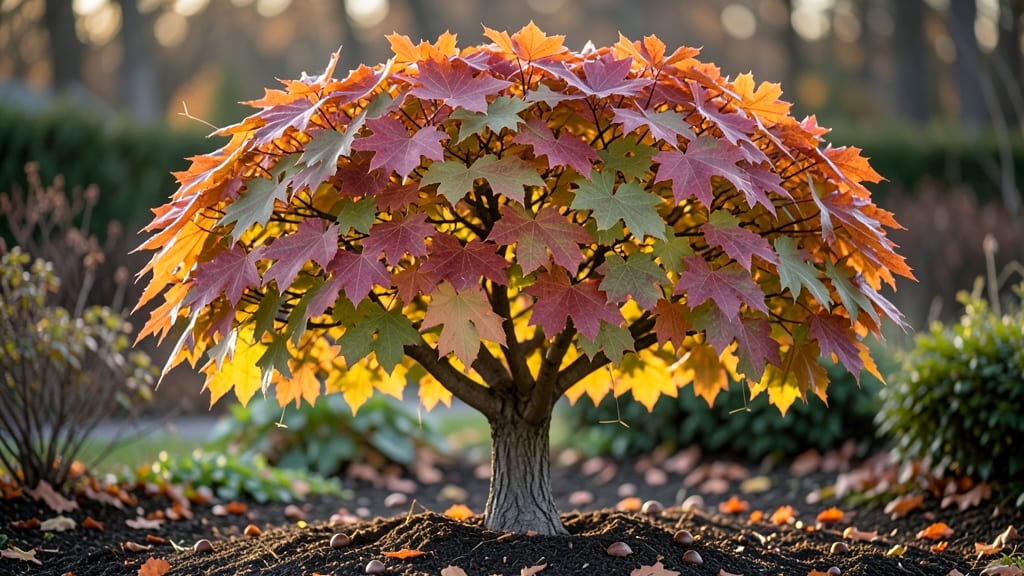
The Norway maple's fall leaf color shifts to bold red-yellow tones as cooler temperatures and shorter daylight signal seasonal change, usually reaching peak intensity between late October and early November. This dramatic transformation happens when anthocyanin pigments develop in response to environmental cues, setting them apart from other maple varieties.
The Norway maple's autumn spectacle isn't just about timing—it's a biochemical masterpiece.
When days grow shorter and temperatures dip, chlorophyll breaks down, revealing hidden pigments. Anthocyanins (those red-yellow compounds) kick in, creating the fiery display that outshines even sugar maples. 🌿 What's fascinating is how location affects the timing—northern climates see earlier color changes, while southern regions may delay until December.
For gardeners, this means strategic planting near patios or walkways can turn your yard into a seasonal highlight.
This transformation happens because Norway maples store more sugars in their leaves than other maples. When stressed by cold nights and warm days, these sugars fuel anthocyanin production. Pruning in late winter (before buds swell) actually enhances next year's color by promoting vigorous new growth.
Pair them with golden birch or serviceberry to create a layered autumn palette that lasts weeks longer than most trees.
💡 In This Article
- Science Behind Norway Maple’s Vibrant Fall Foliage
- Optimizing Norway Maple Leaf Color in Landscapes
Science behind Norway maple’s vibrant fall foliage
The Norway maple's autumn color transformation begins with chlorophyll degradation. As daylight shortens and temperatures dip below 50°F, the green pigment breaks down, revealing hidden yellow carotenoids.
What makes Norway maples unique is their ability to produce anthocyanins—red and purple pigments that develop when sugars trapped in leaves interact with cold nights and warm days. These pigments act like sunscreen, protecting leaves from photooxidative damage while creating that stunning red-yellow gradient. 🌟
Unlike sugar maples (which produce more orange tones) or red maples (with brighter crimson), Norway maples develop a deeper, more complex color palette due to their higher leaf sugar content.
Studies show Norway maple leaves contain up to 20% more soluble sugars than sugar maples, providing the energy needed for intense anthocyanin production.
The color intensity also depends on temperature fluctuations—consistent cold (40-50°F) with sunny days produces the most vibrant hues, while prolonged cloudy weather can mute the display.
This biochemical process explains why Norway maples often outshine other trees in urban landscapes. Their ability to thrive in compacted soils and tolerate pollution means they'll still produce dramatic fall color even in city environments where other maples might struggle.
The timing of color change varies by region—northern climates see peak color 2-3 weeks earlier than southern areas due to earlier temperature drops. 🍂
What most gardeners don't realize is that Norway maples actually produce more anthocyanins in response to stress from drought or nutrient deficiencies. While this might seem counterintuitive, the plant's survival mechanism creates the most spectacular displays when conditions are less than perfect.
This is why you'll often see more intense colors in established trees that have developed deep root systems to withstand seasonal challenges.
The pigment production follows a predictable sequence: yellow carotenoids appear first (around mid-October in most zones), followed by red anthocyanins as temperatures drop further.
In some years, you'll see a beautiful gradient where the same leaf displays both colors simultaneously—yellow on the upper surface where light hits first, and red on the underside where cooler temperatures affect pigment development more quickly. This dual-color phenomenon is particularly striking in mature specimens with thicker leaves.
For comparison, sugar maples primarily develop orange hues from carotenoids without the same anthocyanin intensity, while red maples produce more uniform crimson tones. The Norway maple's ability to combine both pigment pathways creates that signature "fire-engine red" look that makes them a landscape favorite.
The key difference lies in their genetic ability to regulate sugar-to-pigment conversion more efficiently than other maple species. 🔥