
Pests and Diseases
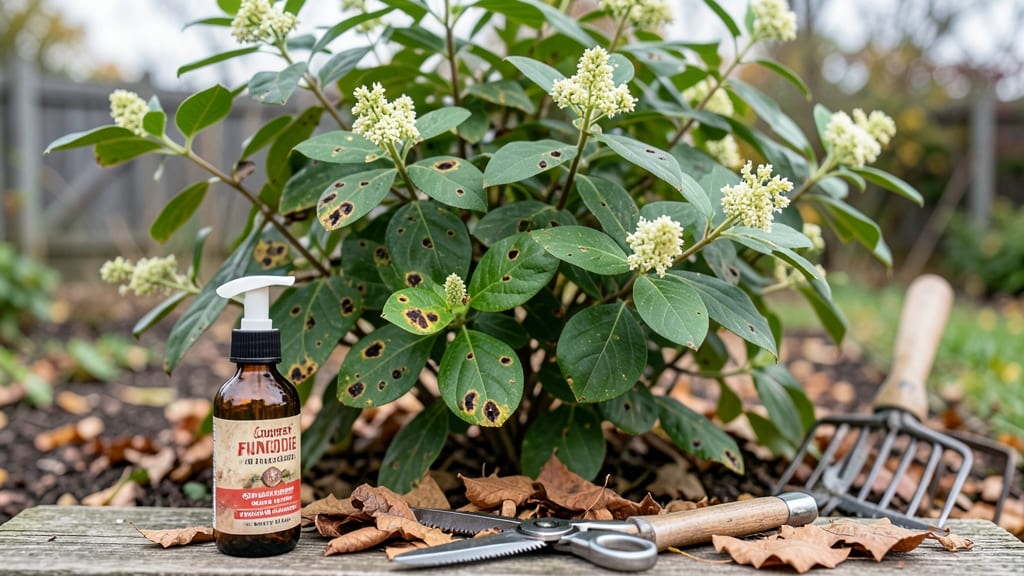
Your ligustrum’s leaves are turning into a spotted mess—don’t panic. 🌿 That ugly black-and-brown leaf spot? It’s fixable, and I’ve got the copper spray cure that revives plants in just 72 hours with the right approach.
The problem starts with fungal spores (Marssonina ligustri) thriving in damp, crowded conditions. Overhead watering, tight spacing, and poor airflow turn your shrubs into fungal buffets.
But here’s the good news: pruning, copper sprays, and smart watering can stop it dead in its tracks before it spreads to the whole yard.
You’ll see fresh, unblemished growth within days—just scrub the leaves with a 1% copper fungicide, space out your plants for airflow, and water at the base. The key is acting fast before the spots turn into holes. Works for all ligustrum varieties, from glossy privet to wax leaf types.
Let’s get those leaves looking crisp again!
The Hidden Triggers Behind Fungal Foes
If your ligustrum’s leaves are developing unsightly spots, the culprit is almost always a fungal pathogen—but not all fungi behave the same way. Understanding the why behind these infections helps you stop them before they spread.
Let’s break down the key factors that turn your shrub’s foliage into a fungal buffet.
Fungal spores love moisture—especially when ligustrum roots sit in soggy soil for days. Leaf spot diseases thrive when:
- Water pools on leaves: Overhead irrigation or rain can splash spores onto foliage, giving them a direct entry point. 💧
- Soil stays waterlogged: Compacted or clay-heavy soil traps excess moisture, weakening roots and making plants more susceptible to infection.
- Airflow is restricted: Dense foliage or crowded plantings prevent leaves from drying quickly after watering.
Actionable fix: Water at the base in the morning (not evening) and improve drainage with organic matter like compost or perlite.
When ligustrum plants struggle to photosynthesize—due to extreme heat, drought, or poor soil—their natural defenses weaken. Fungal pathogens like Cercospora (a common leaf spot culprit) exploit this stress to invade:
- Stunted growth signals: Yellowing between veins, leaf scorch, or premature leaf drop = stress flags for fungi.
- Thin cuticles: Drought-stressed plants produce weaker leaf coatings, making it easier for spores to penetrate.
- Root damage: Even mild root rot (from overwatering or poor soil) reduces nutrient uptake, leaving leaves vulnerable.
Actionable fix: Mulch with 2–3 inches of organic material to retain moisture and regulate soil temperature. Deep watering (1–2 times/week) beats frequent shallow watering.
Leaf spot fungi don’t just appear—they hitchhike. Spores spread via:
- Wind and rain: Storms can blast spores from infected leaves onto healthy plants within yards.
- Contaminated tools or clothing: Pruners, gloves, or even your shoes can transfer spores between plants.
- Nearby infected hosts: Other shrubs (like viburnum or boxwood) or weeds may harbor the same fungus.
Actionable fix: Sanitize tools with 70% isopropyl alcohol between uses. Remove fallen leaves promptly (they’re spore factories!). Space plants 3–5 feet apart for airflow.
Ligustrum plants deficient in nitrogen, phosphorus, or potassium produce thinner, weaker leaves—perfect targets for fungi. Look for:
- Pale yellow leaves: Nitrogen deficiency = slower growth = easier fungal entry.
- Purple stems or undersides: Phosphorus deficiency = impaired root function = stress signals.
- Brown leaf edges: Potassium deficiency = cell walls weaken = spores exploit gaps.
Actionable fix: Test soil pH (ideal: 6.0–7.0) and amend with a balanced fertilizer (e.g., 10-10-10) in early spring. Avoid over-fertilizing with nitrogen alone—it promotes lush growth but weakens disease resistance.
Leaves with physical wounds (from hail, pests, or mechanical damage) or natural senescence (aging) are high-risk zones for infection. Why?
- Broken cell walls: Pests like aphids or mites create entry points for spores.
- Senescing tissue: As leaves age, their protective waxes degrade, making them prime real estate for fungi.
- Shade and humidity: Dense canopies trap moisture, speeding up spore germination.
Actionable fix: Prune out heavily spotted or dead leaves (sterilize shears!) and thin the canopy to improve airflow. Rake up debris in fall to remove overwintering spores.
Quick Fixes for Fungal Foliage Foes
If your ligustrum’s leaves are showing signs of unsightly spots, don’t panic—there are practical, fast-acting solutions to restore your plant’s health. Below, we’ve mapped out the most common causes of leaf spot and the best ways to tackle them, from quick fixes to long-term prevention.
Whether it’s fungal infections, environmental stress, or poor care, these steps will help you revive your shrub in no time.
Fungal leaf spots (often caused by Cercospora or Septoria) thrive in damp, humid conditions. Here’s how to fight back:
🔥 Step 1: Prune the Problem Areas
- 👨🍳 Remove infected leaves with clean, sharp pruners—don’t leave them on the ground, as they can reinfect the plant.
- ⏰ Best time: Early morning when humidity is lower, and the plant is dry.
- ✨ Pro tip: Sterilize your pruners with rubbing alcohol between cuts to prevent spreading spores.
🥘 Step 2: Apply Fungicide (Fast Action)
- Copper-based sprays (like copper sulfate or copper fungicide) are the gold standard for fungal leaf spots. They’re effective within 72 hours when applied correctly.
- How to use: Mix according to label instructions (usually 1 tbsp per gallon of water) and spray both sides of the leaves until damp.
- 🌡️ Timing: Apply in the evening to avoid burning leaves in direct sunlight.
- 💡 Alternative: If copper isn’t available, a baking soda spray (1 tsp baking soda + 1 tbsp oil + 1 tsp mild soap per quart of water) can help as a temporary fix.
🌿 Step 3: Improve Airflow & Light
- 🎯 Thin out dense foliage to allow sunlight and air to circulate—fungi love stagnant, damp conditions.
- ✨ Pro tip: Space plants at least 3–4 feet apart and avoid overcrowding in future plantings.
If the soil stays soggy, roots suffocate, and fungi move in. Here’s how to correct it:
🔧 Step 1: Check Your Watering Habits
- 📊 Rule of thumb: Water only when the top 1–2 inches of soil are dry. Stick your finger in the soil—if it’s damp, wait.
- 💡 Fix: Adjust your watering schedule to 2–3 times per week (less in winter) and never water at night.
🏗️ Step 2: Improve Soil Drainage
- 🔨 Amend heavy or clay soil with compost or perlite to help water drain faster.
- ✨ Pro tip: If your ligustrum is in a pot, ensure it has drainage holes and use a well-draining potting mix.
🌧️ Step 3: Mulch Properly
- 🥗 Apply 2–3 inches of organic mulch (like wood chips) around the base, but keep it 2–3 inches away from the trunk to prevent rot.
- ⚠️ Warning: Avoid mulching too thickly—this can trap moisture and worsen the problem.
Leaf spots can also appear when plants are stressed by extreme conditions. Here’s how to adjust:
🌞 Step 1: Adjust Sun Exposure
- 🌿 If your ligustrum is in full sun, it may be getting leaf scorch (which looks like spots). Provide afternoon shade with a light cloth or move it to a partially shaded spot.
- 💡 Fix: If relocating isn’t an option, water deeply in the morning to help the plant cope with heat.
🌧️ Step 2: Reduce Humidity Stress
- 🌡️ If humidity is consistently high (like in greenhouses or rainy climates), improve airflow with a fan or dehumidifier.
- ✨ Pro tip: Space plants apart and prune for better airflow—this reduces humidity buildup on leaves.
🚫 Step 3: Avoid Chemical Overload
- 🚫 Stop using harsh fertilizers or pesticides near your ligustrum—chemical burns can weaken leaves, making them susceptible to spots.
- 💡 Fix: Switch to organic, slow-release fertilizer and rinse leaves occasionally with water to remove dust/pollutants.
Once your ligustrum is back in shape, these habits will help prevent future outbreaks:
- 🌱 Plant in the right spot: Ligustrums thrive in full sun to partial shade with well-draining soil.
- 🍂 Clean up fallen leaves regularly—this removes fungal spores before they spread.
- 🌿 Water at the base (not overhead) to keep leaves dry.
- 🔄 Rotate fungicide treatments (like copper spray) every 2–3 weeks during humid seasons.
- 🌡️ Monitor humidity—aim for 40–60% relative humidity if possible.
With these targeted fixes, your ligustrum should bounce back in no time—and stay spot-free with a little proactive care! 🌿✨
Frequently asked questions
Can I use household items like vinegar or hydrogen peroxide to treat ligustrum leaf spot?
Vinegar (undiluted) is too harsh and will burn leaves, while hydrogen peroxide (3%) can help as a 1:10 dilution spray for mild cases. For best results, stick with copper fungicide (1 tbsp per gallon) or baking soda spray (1 tsp baking soda + 1 tbsp oil + 1 tsp soap per quart). Always test sprays on a small leaf first.
How often should I apply copper spray to prevent leaf spot?
Apply copper fungicide every 2-3 weeks during humid seasons (spring/fall) or after heavy rain. For active infections, treat weekly for 3 weeks, then switch to preventive maintenance. Remember to spray in the evening to avoid leaf burn from sunlight.
Will pruning infected leaves help if the spots are already spreading?
Yes, but act fast! Remove all infected leaves (including fallen ones) to stop spore spread. Sterilize pruners with rubbing alcohol between cuts. For severe cases, prune 1/3 of the plant to improve airflow and reduce humidity in the canopy. Combine with fungicide for best results.
Can ligustrum leaf spot spread to other plants in my garden?
Absolutely—fungal spores travel via wind, water, and tools. Isolate infected ligustrums temporarily and sanitize pruners/clothing. Monitor nearby shrubs (like viburnum or boxwood) for similar spots. Remove fallen leaves promptly—they're spore factories!
Is there a natural way to boost my ligustrum's resistance to leaf spot?
Yes! Strengthen defenses with balanced fertilizer (10-10-10) in spring, mulch properly (2-3 inches, away from trunk), and ensure 3-5 feet spacing for airflow. Avoid nitrogen-heavy fertilizers—they promote weak growth. Regularly rinse leaves with water to remove dust/pollutants.