
Vegetables
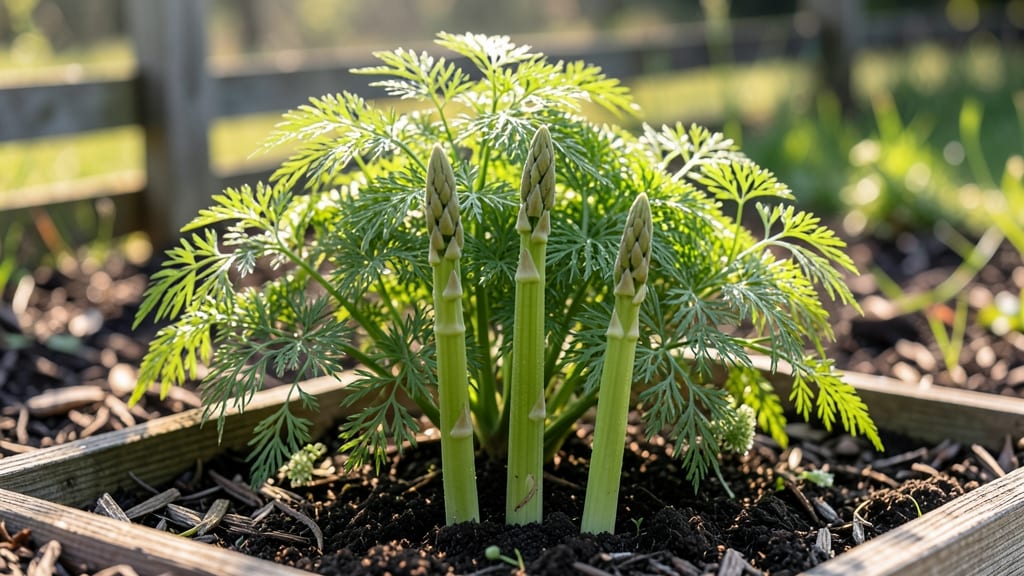
Asparagus is not a leafy green—it’s a perennial vegetable with edible shoots that grow from underground rhizomes, while leafy greens like spinach or kale consist of broad, photosynthetic leaves. Botanically, asparagus belongs to the lily family, not leafy vegetables.
Asparagus stands out in the produce aisle because its structure is completely different from leafy greens. 🌱 While greens like kale or spinach grow from broad leaves packed with chlorophyll, asparagus emerges as a spear from thick, woody rhizomes underground.
This unique growth pattern is why it’s classified as a vegetable rather than a green—its edible part is actually a modified stem, not leaves. The confusion often comes from how we cook and eat it, but botanically, it’s in a whole different category.
What makes this distinction important is how you use it in meals. Leafy greens are typically eaten raw or lightly cooked to preserve their nutrients, while asparagus thrives when roasted, grilled, or sautéed to bring out its natural sweetness.
The nutritional differences are also worth noting: asparagus is packed with folate and prebiotic fiber, while leafy greens offer more vitamin K and iron. Understanding these differences helps you balance your plate better.
💡 In This Article
- Botanical Differences Between Asparagus and Leafy Greens
- Nutritional and Culinary Uses of Asparagus vs. Leafy Greens
Botanical differences between asparagus and leafy greens
The key distinction lies in asparagus's growth structure: it emerges from thick, horizontal underground stems called rhizomes, which store nutrients and produce new shoots each year.
Unlike leafy greens that develop from broad, flat leaves packed with chlorophyll for photosynthesis, asparagus spears are actually modified stems that push through the soil.
This underground growth system is why asparagus is classified as a perennial vegetable—it regrows annually from the same root system, unlike annual leafy greens that complete their life cycle in one season.
Botanically, asparagus belongs to the Asparagaceae family within the lily order (Asparagales), while leafy greens like spinach, kale, and Swiss chard fall under diverse families (Amaranthaceae, Brassicaceae, Chenopodiaceae). The edible portion of asparagus is technically a bud that hasn't yet opened into leaves, making it a unique vegetable.
This structural difference explains why asparagus has a woody texture at the base (the stem) and tender tips, while leafy greens offer a delicate, leafy texture throughout.
The growth process begins when rhizomes send up spears that break through the soil surface in early spring. These spears grow rapidly—up to 1-2 inches per day—before developing into ferns with compound leaves. The edible portion we harvest is only the young, tender spear before it matures.
This contrasts with leafy greens, which are harvested when their leaves reach full photosynthetic capacity, typically after 4-6 weeks of growth. 🌱
Another critical difference is the plant's reproductive strategy. Asparagus produces flowers and berries (though the berries are toxic to humans) from its above-ground fern-like foliage, while leafy greens focus their energy on leaf production.
This floral development further cements asparagus's classification as a vegetable rather than a green, as vegetables are typically defined by their edible, non-reproductive parts. The rhizome system also makes asparagus hardier—it can survive winter dormancy and regrow each spring, unlike leafy greens that must be replanted annually.
Consider the nutrient allocation in these plants: asparagus directs energy toward growing its edible spear quickly, resulting in a high concentration of folate (18% DV per spear) and prebiotic fiber that supports gut health.
Leafy greens, meanwhile, prioritize leaf development, leading to higher levels of vitamin K (180% DV per cup in kale) and iron. This fundamental difference in growth priorities shapes their nutritional profiles and culinary uses.
For gardeners, this botanical distinction matters when planning crops. Asparagus requires 2-3 years to establish a mature rhizome system before producing harvestable spears, while leafy greens can be ready in as little as 30 days.
The perennial nature of asparagus also means it can occupy garden space for 15+ years with proper care, unlike annual greens that need constant replanting. This long-term growth pattern is another clue to its vegetable classification rather than a green.