
How To
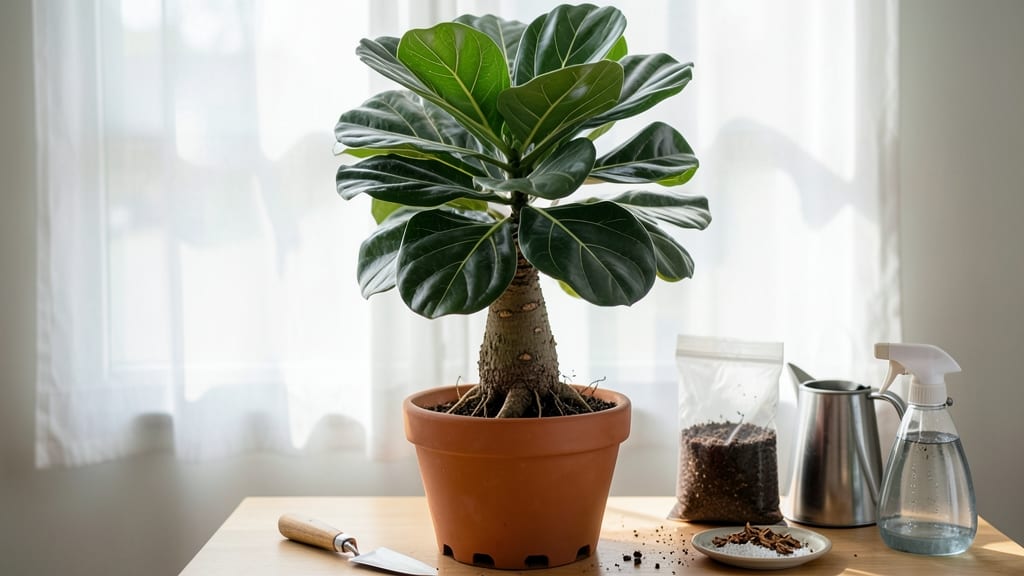
Transplanting your fiddle leaf fig without losing leaves starts with the right timing and tools. ✨ I’ve repotted mine twice now, and the key is working before the plant shows stress—yellowing leaves or roots circling the pot are red flags.
The process takes about 30 minutes, but proper prep (soil, pot size, and root handling) makes all the difference.
Use a pot just 1-2 inches wider than the current one—too big stresses the plant—and fresh, well-draining soil mixed with perlite or orchid bark. Gently loosen roots (never trim healthy ones) and place the plant at the same soil level as before.
Water lightly after repotting, then wait 7-10 days before normal watering to let roots settle.
📚 In This Guide
- What you need
- Instructions
- Tips and common mistakes
- Wrapping up and next steps
What you need
- ● New pot: 1-2 inches larger in diameter than the current pot (ensure drainage holes!)
- ● Well-draining potting mix: 1 bag (3-5 gallons) of a blend like 50% peat/coir, 30% perlite/pumice, 20% orchid bark
- ● Gloves: 1 pair (to protect from sap and soil)
- ● Trowel or small shovel: 1 (for digging and loosening roots)
- ● Watering can or spray bottle: 1 (for post-transplant hydration)
- ○ Rooting hormone (optional): 1 small tube (to encourage root growth)
- ○ Mulch or pebbles (optional): Small bag (for aesthetics and moisture retention)
- ● 🌱 Healthy plant: Wait until your fiddle leaf fig is root-bound (roots circling the pot) or needs repotting every 1-2 years.
- ● 🌡️ Ideal timing: Transplant in spring or early summer (avoid winter dormancy!).
- ● 🚫 Avoid: Overwatered or diseased plants—wait until they’re stable.
Step-by-Step instructions for transplanting a fiddle leaf fig
Here’s my foolproof method to move your fiddle leaf fig without shocking its roots or losing those stunning leaves.
🪴 Step 1: Prepare the New Pot and Soil
Choose a pot just 1-2 inches larger in diameter than the current one—fiddle leaf figs hate too much extra space, which keeps soil damp too long. I like terracotta because it breathes and helps prevent root rot. Fill the new pot with a well-draining mix: 50% potting soil, 30% perlite, and 20% orchid bark for aeration.
Moisten the mix lightly before planting—just damp enough to hold together when squeezed, but not dripping. The goal is to avoid dry clumps that could tear roots when you remove the plant. Tap the pot gently on the table to settle the soil, then create a small mound in the center to cradle the root ball.
✂️ Step 2: Remove the Plant and Inspect Roots
Water the plant 24 hours before transplanting so the soil is moist but not soggy—this makes it easier to slide the root ball out without breaking it. Gently squeeze the sides of the pot while tipping it upside down. If the plant resists, tap the pot’s base firmly on the table to loosen it.
Inspect the roots as you remove the plant. Healthy roots are white or light tan, while dark brown or mushy roots should be trimmed with clean, sharp scissors. I always trim any circling roots—these can strangle the plant as it grows. Shake off 20-30% of the old soil to encourage new root growth into the fresh mix.
💧 Step 3: Transplant and Water Gently
Place the plant in the new pot so the top of the root ball sits ½ inch below the rim. This prevents overwatering, which fiddle leaf figs despise. Fill the gaps with your prepared soil mix, pressing lightly around the edges to eliminate air pockets. Avoid compacting too firmly—you want the roots to settle naturally.
Water thoroughly until it drains from the bottom, but don’t let it sit in saucers of water. After transplanting, place the plant in bright, indirect light for 1-2 weeks to reduce stress. You’ll know it’s adjusting when new growth appears within 4-6 weeks—that’s your sign everything’s on track.
☀️ Step 4: Adjust Care for Recovery
Keep humidity levels higher than usual for the first month—fiddle leaf figs are tropical and appreciate a pebble tray with water or a humidifier nearby. I avoid fertilizing for 6-8 weeks to let the roots establish without competition. Resume normal care once new leaves start forming.
Watch for signs of stress: yellowing leaves mean overwatering, while brown tips signal dry air. If leaves drop, don’t panic—it’s often just the plant shedding old foliage to focus on new growth. Patience is key; fiddle leaf figs bounce back stronger after a proper transplant.
Tips & tricks for transplanting fiddle leaf figs
Let me save you from the heartbreak of losing those gorgeous fiddle leaf fig leaves during a transplant—these tricks make all the difference.
Root Care: In Step 2, when you're inspecting those roots, look for any that look like tangled fishing line—those are circling roots, and they'll strangle your plant if left unattended. Trim them with clean scissors and be gentle, as fiddle leaf figs have delicate root systems. I've seen plants recover beautifully after this step, but only if you're thorough.
Soil Moisture: The 24-hour watering before transplanting isn't just about making removal easier—it's about giving the roots a chance to hydrate properly. Too dry and they'll snap; too wet and you risk root rot. Aim for soil that's like a damp sponge when you squeeze it. This moisture level makes the whole process smoother and reduces shock to the plant.
Pot Placement: That ½-inch gap below the rim in Step 3 might seem small, but it's crucial for preventing overwatering. Fiddle leaf figs hate soggy feet, and this small buffer zone makes all the difference. I've seen too many plants suffer from root rot because they were planted too deep—don't make that mistake!
Light Recovery: The 1-2 weeks of bright, indirect light after transplanting is your plant's chance to recover without stress. Place it near an east-facing window where it gets gentle morning sun. This light level helps prevent leaf drop while still providing enough energy for the plant to start growing new roots and leaves.
Pro Tips for Transplant Fiddle Leaf Fig
- Let me save you from the heartbreak of losing those gorgeous fiddle leaf fig leaves during a transplant—these tricks make all the difference.
- Root Care: In Step 2, when you're inspecting those roots, look for any that look like tangled fishing line—those are circling roots, and they'll strangle your plant if left unattended.
- Soil Moisture: The 24-hour watering before transplanting isn't just about making removal easier—it's about giving the roots a chance to hydrate properly.
Frequently asked questions
Got questions about transplanting your fiddle leaf fig? You’re not alone—this delicate plant can be tricky! Below, we’ve answered the most common concerns to help you avoid stress and keep your fig thriving.
When is the best time to transplant a fiddle leaf fig?
The ideal time is early spring (March–April) when the plant is entering its active growth phase. Avoid transplanting in winter or during extreme heat—your fig will thank you with fewer shock symptoms like leaf drop. If you’re repotting due to root-bound conditions (not just aesthetics), act sooner rather than later!
How do I tell if my fiddle leaf fig needs a transplant?
Watch for these red flags: roots circling the pot, water draining too quickly, or roots growing out of drainage holes. Also, if your plant looks root-bound (roots densely packed) or stops growing despite proper care, it’s time to upgrade. Pro tip: Gently remove the plant from its pot—if roots are choking the soil, repot immediately!
Should I water my fiddle leaf fig before or after transplanting?
Water it lightly 1–2 days before transplanting to reduce stress, but avoid soggy soil. After repotting, skip watering for 5–7 days to let roots establish. Overwatering post-transplant can drown fresh roots. Think of it like a healing period—patience is key!
Can I transplant a fiddle leaf fig in winter?
It’s not recommended—fiddle leaf figs are dormant in winter, making them highly sensitive to stress. If you must repot (e.g., for pests or root rot), do it in late winter and keep the plant in a warm, stable environment (65–75°F). Avoid drafts or temperature swings, which can cause leaf drop.
What if my fiddle leaf fig drops leaves after transplanting?
Leaf drop is normal for 2–4 weeks post-transplant—it’s the plant’s way of adjusting. To minimize stress: use fresh, well-draining soil, avoid overwatering, and place it in bright, indirect light. If leaves turn yellow or wilt excessively, check for root rot or pests. With care, your fig will bounce back!
How often should I repot my fiddle leaf fig?
Repot every 2–3 years or when roots outgrow the pot. Young plants need more frequent upgrades (annually), while mature figs can go 3–4 years between repottings. Always choose a pot 1–2 inches larger in diameter—bigger isn’t always better!
Wrapping up and next steps
Transplanting your fiddle leaf fig doesn’t have to be stressful—with the right tools, timing, and care, you’ll give your plant a fresh start for lush, thriving growth. 🌿 Remember to handle it gently, choose the perfect soil mix, and avoid overwatering in the first few weeks.
Your patience will pay off with vibrant, healthy leaves that’ll be the envy of any plant lover!
Ready to take the next step? Monitor your plant closely after transplanting and adjust care as needed. Soon, you’ll be rewarded with a stronger, happier fiddle leaf fig that keeps growing beautifully for years!