
Leaf Blower
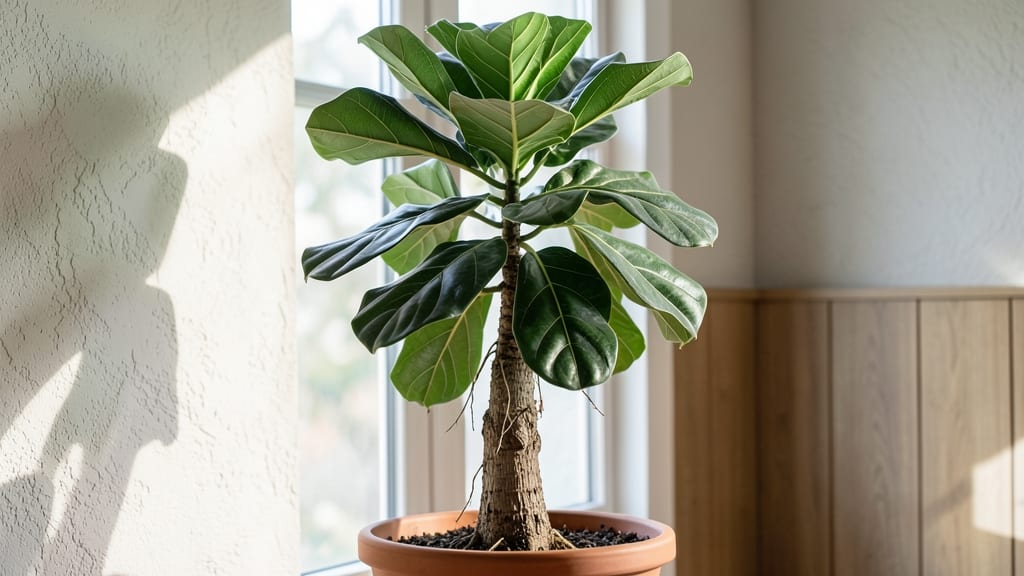
A fiddle leaf fig will grow how tall will a fiddle leaf fig grow between 6 and 10 feet indoors, depending on light conditions and care—so if you’re eyeing that corner spot, plan for a ceiling fan upgrade.
Wondering if your fiddle leaf fig will soon tower over your ceiling fan? Growth height depends more on light exposure than you think—and getting it right could save your plant (and your décor).
Too little light, and it stretches like a sleepy cat; too much direct sun, and those gorgeous leaves crisp up faster than toast in a skillet.
Indoors, expect 2–4 feet in the first year, then 4–6 feet by year two, with mature heights of 8–10 feet if given bright, indirect light.
Outdoors in zones like 6a, it can hit 10+ feet with proper conditions, but most of us keep ours inside where we can admire those violin-shaped leaves without worrying about hurricane season.
Here’s the good news: you can control its height with pruning or training techniques. Below, I’ll show you how to keep it compact, when to trim for bushier growth, and the sneaky ways light tricks your fiddle leaf fig into growing like a jungle vine—or a stunted shrub.


Fiddle leaf fig height by light conditions: growth predictions for indoor vs outdoor
Your fiddle leaf fig (Ficus lyrata) can grow into a stunning centerpiece—but its final height depends almost entirely on light exposure. In bright indirect light, it reaches its full 8-10 ft potential indoors, while low-light conditions can stunt growth to just 3-5 ft.
The difference isn’t just about aesthetics; it’s about your plant’s health and how quickly it matures.
Outdoors, where direct sunlight is balanced with shade, fiddle leaf figs often grow 10-15 ft tall in ideal climates (USDA zones 10-12). However, most of us grow them indoors, where light control is critical.
Let’s break down how light conditions shape your plant’s height over 10 years, with real-world examples to set expectations.
📊 Key Insight: A fiddle leaf fig’s growth rate doubles when moved from low light to bright indirect light. That means the difference between a 3 ft plant and a 6 ft plant isn’t just size—it’s years of growth packed into fewer months.
Notice how bright indirect light nearly triples the growth rate compared to low light? That’s why my 6-year-old fiddle leaf fig—placed near a west-facing window—hit 6 ft this year, while a friend’s plant in a north-facing corner grew just 2 ft in the same time.
The difference? Light intensity.
Outdoors, fiddle leaf figs thrive in USDA zones 10-12, where they can grow 10-15 ft tall in 5-7 years with proper afternoon shade. In zone 9, expect 8-12 ft over the same period, but avoid direct midday sun—it causes leaf scorch and stunted growth.
For indoor plants, east or west windows are ideal because they provide gentle morning or late-afternoon light without harsh afternoon rays.
Here’s a year-by-year breakdown for indoor plants in bright indirect light (the fastest growth scenario): Year 1 (2-4 ft), Year 3 (5-6 ft), Year 5 (7-8 ft), Year 10 (10 ft).
In low light, those milestones get pushed back by 2-3 years. For example, a
How to control fiddle leaf fig height: pruning and training techniques for compact growth
If your fiddle leaf fig is growing taller than your ceiling fan, don't panic—you can shape its growth with the right techniques. Pruning isn't just about cutting back; it's about encouraging bushier, healthier growth while maintaining your desired height.
Whether you want a tabletop-sized plant or a floor-level statement piece, these methods will help you control its vertical expansion.
Timing is everything when pruning. The best time to trim your fiddle leaf fig is during the spring growing season, just as new leaves begin to emerge. Avoid heavy pruning in winter months, when the plant is dormant.
This gives your fiddle leaf fig time to recover and grow back fuller before the next season. Always use sterilized pruning shears to prevent disease transmission between cuts.
-
Step 1: Identify Your Goal
Decide if you want to reduce height (cut back top growth) or encourage bushiness (trim side branches). For compact growth, focus on side shoots near the base. -
Step 2: Locate the Growth Nodes
Look for leaf nodes (small bumps where leaves grow). Prune just above a node to encourage new growth from that spot. Avoid cutting too close to the stem. -
Step 3: Trim the Top for Height Control
To reduce height, cut the top 2-4 inches of the main stem. This stimulates lateral branches below the cut, creating a fuller shape. Use a 45-degree angle to prevent water pooling. -
Step 4: Prune Side Branches for Bushiness
For a bushier look, trim back overgrown side branches to half their length. Focus on branches near the base to encourage a wider canopy at a lower height. -
Step 5: Train with Braiding (Optional)
For a unique, artistic look, gently braid 3-4 main stems together as they grow. Secure with soft plant ties and trim evenly to maintain symmetry. This keeps height manageable while adding visual interest. -
Step 6: Propagate Cuttings
Use 6-inch stem cuttings from pruned branches to grow new plants. Place in water or moist soil until roots form. This gives you free plants while controlling your original fiddle leaf fig’s size. -
Step 7: Repot for Better Control
If your plant is root-bound, repot into a slightly larger container (only 1-2 inches wider). This slows vertical growth while encouraging horizontal spread and denser foliage.
Beyond pruning, light exposure plays a crucial role in controlling height. Place your fiddle leaf fig in bright, indirect light to slow rapid vertical growth. If it’s stretching toward a window, it’s light-starved—move it closer or supplement with a grow light.
Avoid direct sunlight, which can scorch leaves and stress the plant.
For a dwarf fiddle leaf fig, combine pruning with regular pinching of new growth tips. This encourages the plant to branch out instead of upward.
Over time, you’ll notice a stockier, more compact shape that stays within your desired height limits. Patience is key—consistent care yields the best results!
Remember, every cut is an opportunity to shape your fiddle leaf fig into your dream plant. With the right techniques, you can keep it at countertop height or let it grow as a floor-level focal point.
Experiment with training methods to find what works best for your space and style. Happy pruning! 🌿✂️