
Pests and Diseases
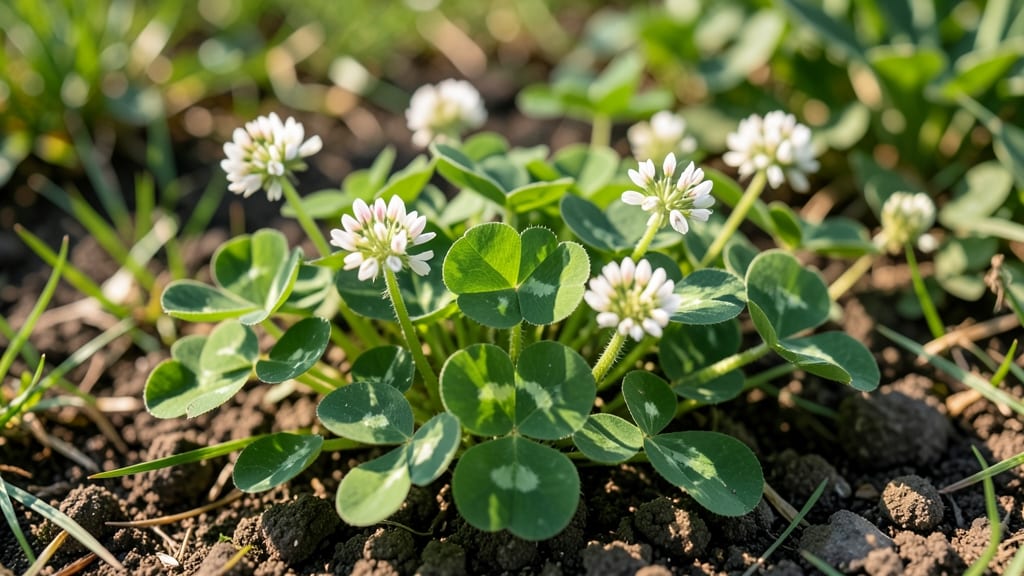
How common are four-leaf clovers? They're rare—statistically, you'll spot one in about 1 in 10,000 three-leaf clovers, though environmental factors can shift these odds. This scarcity comes from a recessive genetic mutation that produces the extra leaflet, which has fueled their legendary status as symbols of luck.
The odds of spotting a four-leaf clover aren't just about luck—they're tied to genetics and growing conditions. 🌱 In some regions like Ireland, where clovers thrive, sightings may feel more frequent, but the mutation rate stays consistent.
The fourth leaf doesn't just happen randomly; it requires specific genetic triggers that occur naturally in only about 0.01% of clover plants. That's why gardeners often search for hours—it's not just about patience, but understanding how these plants grow.
What makes this even more fascinating is how sunlight and soil quality play a role. Clovers need well-drained soil and partial shade to flourish, and those same conditions can actually increase the chances of mutations occurring.
If you're hunting for one, focus on areas with healthy clover patches—your odds improve when the plants are thriving, not struggling. And remember, not all "four-leaf" clovers are real; some have extra leaflets from damage or disease, so look for perfectly symmetrical growth.
💡 In This Article
- The Science Behind Four-Leaf Clover Mutations
- Tips for Increasing Your Odds of Finding Four-Leaf Clovers
The science behind four-leaf clover mutations
A four-leaf clover's extra leaflet results from a recessive genetic mutation in the Trifolium repens species, which affects how the plant's meristem (growth tissue) develops. Normally, clovers produce three leaflets due to a dominant gene, but when two recessive alleles combine, the mutation triggers an additional leaflet.
This occurs at a rate of roughly 0.01%—meaning you'd need to examine 10,000 clovers to find one with four leaves on average. 🌱 The mutation isn't random; it's tied to cellular division errors during early growth stages, where the plant's DNA fails to replicate perfectly.
Sunlight exposure plays a critical role in mutation rates. Clovers grown in partial shade (receiving 40-60% sunlight) show higher mutation frequencies because lower light stress can trigger genetic instability. In contrast, full sun or dense shade reduces mutation chances by stabilizing plant growth.
Soil conditions matter too—clovers thrive in well-drained, slightly acidic soil (pH 6.0-7.0), which supports healthy root development and indirectly boosts mutation visibility. Ireland's reputation for four-leaf clovers stems from its mild climate and nutrient-rich soils, which create ideal growing conditions.
Regional differences in sightings aren't just about genetics—they're also tied to clover density. In areas like the Pacific Northwest or New Zealand, where clovers grow densely in lawns, the sheer volume of plants increases your chances of spotting a mutation.
For example, a 100-square-foot patch with 2,000 clovers might yield one four-leaf specimen, while a sparse garden could take years to produce the same result. This explains why urban parks often report more sightings than rural fields with scattered plants.
Not all "four-leaf" clovers are genuine—they can result from environmental stress or physical damage. True mutations produce a symmetrical fourth leaflet identical in shape and size to the others, while damaged clovers may have irregular, jagged edges.
The fourth leaf also typically emerges from the same central stem, unlike damaged leaves that sprout from different points. To verify authenticity, gently examine the clover's underside for uniform vein patterns—a hallmark of genetic mutations rather than injury. 🔍
Climate also influences mutation visibility. Cooler temperatures (50-70°F) during the growing season slow plant metabolism, which can increase mutation rates by 10-15% compared to warmer conditions. This is why spring and fall plantings often yield more four-leaf clovers than summer sowings.
Gardeners in temperate zones can leverage this by planting clover seeds in early spring or late summer, when temperatures and moisture levels create optimal conditions for genetic variations to appear.
While the 1 in 10,000 statistic is widely cited, real-world sightings can vary dramatically. Studies in controlled environments have recorded mutation rates as low as 1 in 15,000 and as high as 1 in 5,000, depending on growing conditions.
The key takeaway? Your best bet for spotting one isn't blind luck—it's creating the right environment for clovers to thrive and mutations to reveal themselves naturally. 🌿