
Pests and Diseases
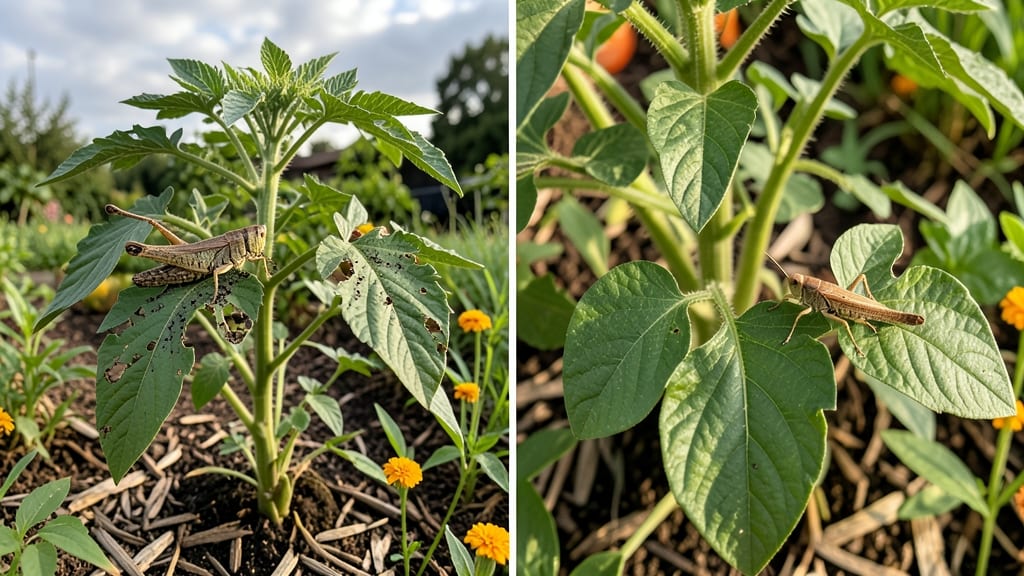
Grasshopper leaf damage turns your lush garden into a skeleton act overnight. 🌿 I’ve watched my prized roses and tomatoes get skeletonized by these striped bandits—until I learned the preventative spray and pruning fix that works without harsh chemicals.
The key? Catching them early and using a layered approach that keeps them off your plants for good.
These hoppers don’t discriminate—they’ll chew through zucchini, lavender, and even your prized hostas. The damage starts as tiny notches along leaf edges, then spirals into holes and bare stems if left unchecked.
My first year, I lost half my basil crop before I realized what was happening. Now, I act at the first sign of trouble with a simple spray that grasshoppers hate.
You’ll need just three ingredients—all non-toxic—to create a spray that deters grasshoppers while keeping your garden thriving. Combine it with strategic pruning to remove damaged leaves (they’re attracted to fresh growth), and you’ll break their cycle.
Within a week, new leaves will emerge lush and untouched, and your plants will bounce back faster than you’d expect.
This method works for vegetable gardens, flower beds, and even houseplants if you spot them early. The best part? It’s cheaper than store-bought sprays and safer for kids and pets. Let’s get your garden back to full, healthy glory—without turning it into an all-you-can-eat buffet for grasshoppers.
Root Causes Of Leaf Destruction
When grasshoppers descend on your plants like tiny, hungry tornadoes, the damage isn’t just random—it’s the result of their survival instincts, environmental triggers, and plant vulnerabilities.
Understanding why these pests target your garden is the first step to stopping them. Here’s a breakdown of the key factors driving their leaf-munching behavior.
Grasshoppers are generalist feeders, meaning they’ll eat almost any green plant if food is scarce. When their population explodes—often due to warm winters, abundant rainfall, or lack of natural predators—they become desperate for sustenance.
A single adult can consume up to 16 times its body weight in plants per day, and nymphs (baby grasshoppers) are just as voracious.
🔍 Why your plants?
- Drought-stressed plants are easier to digest and often more nutritious, making them a prime target. Grasshoppers can detect stressed foliage through volatile organic compounds (VOCs) released by struggling plants.
- New growth is softer and more tender, offering less resistance than mature leaves. Young shoots and seedlings are especially at risk.
- Monoculture gardens (large patches of the same plant) provide a buffet effect, attracting swarms that would otherwise disperse.
💡 Pro Tip: If you’ve noticed a sudden spike in grasshopper activity, check your soil moisture levels—dry conditions can trigger mass migrations toward greener pastures (your yard!).
Grasshoppers thrive in hot, dry conditions, but their feeding patterns shift with the seasons. Understanding their life cycle helps predict when damage will peak:
| Season | Grasshopper Behavior | Plant Vulnerability |
|---|---|---|
| Early Spring | Overwintered adults lay eggs in soil; nymphs emerge when temps rise above 60°F (15°C). | New spring growth is tender and highly attractive. |
| Late Spring/Early Summer | Nymphs molt 5–6 times, increasing appetite exponentially. Adults emerge by mid-summer. | Drought-stressed plants become weak, inviting more feeding. |
| Summer | Peak feeding occurs during heatwaves; grasshoppers seek shade in gardens. | Mature plants may show skeletonized leaves (veins remain, tissue eaten away). |
| Fall | Adults mate and lay eggs; feeding slows as temps drop. | Late-season crops (like corn or beans) are still vulnerable. |
🌡️ Key Factor: A dry, hot spell followed by sudden rain can cause a population explosion in just weeks. This "boom-and-bust" cycle is why some years see catastrophic damage while others remain mild.
Not all plants are equally appealing to grasshoppers. They favor species with high moisture content, soft textures, and minimal chemical defenses. Here’s what makes your plants a grasshopper smorgasbord:
- Preferred Host Plants:
- Vegetables: Corn, beans, peas, lettuce, spinach, tomatoes (especially young plants).
- Ornamentals: Rose bushes, hibiscus, marigolds, petunias.
- Grasses: Lawns, ornamental grasses, wheat, and barley.
- Avoidance Traits: Plants with hairy leaves, thick wax coatings, or strong aromas (like lavender or rosemary) are often left alone.
- Chemical Cues: Grasshoppers use taste receptors on their legs to test plants before feeding. If a leaf feels "wrong" (e.g., fuzzy or bitter), they’ll move on.
✨ Surprising Fact: Some plants, like dill, fennel, and Queen Anne’s lace, can actually attract grasshoppers away from your prized crops—a tactic called trap cropping.
Grasshoppers are part of a delicate food web, but when their predators disappear, their numbers spiral out of control. Common natural enemies include:
- Birds (robins, sparrows, meadowlarks—especially those with strong beaks for crushing exoskeletons).
- Spiders (wolf spiders and jumping spiders hunt nymphs).
- Parasitic Wasps lay eggs inside grasshopper eggs, killing them from within.
- Toads and Frogs (they’re slow but effective at snacking on small nymphs).
- Lizards and Small Mammals (like shrews) help control populations.
🚨 Why the imbalance?
- Pesticide use can kill beneficial predators faster than grasshoppers, creating a vacuum.
- Habitat loss (e.g., removing brush piles or wildflower borders) reduces hiding spots for predators.
- Mild winters mean fewer freeze-outs for grasshopper eggs, while predators may still struggle.
💡 Pro Tip: If your yard lacks birds or spiders, consider adding a wildlife-friendly border with native plants and water sources to encourage predators to move in.
Quick Fixes for Chewed Leaves
If your plants are looking like a grasshopper buffet, don’t panic! With the right approach, you can restore your garden’s health and keep those leaf-munching pests in check. Below are practical, step-by-step solutions tailored to the most common causes of grasshopper leaf damage—from organic remedies to proactive prevention.
Grasshoppers are the most obvious (and annoying) cause of leaf damage. Here’s how to evict them fast and keep them from returning:
🔥 Step 1: Handpick the Pests (Yes, Really!)
- When to do it: Early morning or late evening when grasshoppers are sluggish.
- How to do it:
- Wear gloves and inspect leaves, stems, and soil for hoppers.
- Drop them into a bucket of soapy water (1 tbsp dish soap per gallon) to kill them instantly.
- Pro tip: 💡 Use a flashlight at night—they’re easier to spot when they’re less active!
🍳 Step 2: Set Up Natural Traps
- DIY Beer Trap:
- Bury a shallow container (like a tin can) in the soil with beer or yeast water inside.
- Grasshoppers are attracted to the scent and drown.
- Diatomaceous Earth (DE) Barrier:
- Sprinkle food-grade DE around plant bases and along garden edges.
- It’s non-toxic to humans/pets but dehydrates grasshoppers on contact.
- Reapply after rain—it loses effectiveness when wet.
👨🍳 Step 3: Use Homemade Sprays (Safe for Plants & Pets)
- Soap Spray:
- Mix 1 tbsp mild liquid soap (like Castile soap) + 1 quart water in a spray bottle.
- Spray directly on grasshoppers (avoid blooming plants—soap can harm them).
- Neem Oil Spray (Repellent + Growth Inhibitor):
- Combine 2 tbsp neem oil + 1 tsp mild soap + 1 quart water.
- Spray evening (neem can burn leaves in direct sunlight).
- Bonus: It disrupts grasshopper egg-laying and deters future hatches.
Stressed plants are grasshopper magnets—they’re easier to munch when already struggling. Fix the root cause with these garden-first solutions:
🥘 Step 1: Adjust Watering Habits
- Problem: Overwatering = soft, tender leaves = grasshopper snack.
- Fix:
- Water deeply but less frequently (1–2 inches per week, depending on climate).
- Use drip irrigation or soaker hoses to keep foliage dry (grasshoppers hate damp leaves).
- Morning watering is best—leaves dry faster, reducing pest attraction.
🔪 Step 2: Improve Soil Health
- Test your soil (a simple DIY kit from a garden center works).
- Amend with compost (1–2 inches mixed into the top 6 inches of soil).
- Add mulch (straw or wood chips) to retain moisture and deter grasshoppers from laying eggs.
- Avoid nitrogen-heavy fertilizers—they produce soft growth that grasshoppers love.
⏰ Step 3: Prune Strategically
- Remove heavily damaged leaves (grasshoppers target stressed plants, so pruning sends a signal to stop).
- Thin out dense foliage to improve airflow and reduce hiding spots.
- Pro tip: ✨ Prune in the late afternoon to avoid shocking plants in peak sunlight.
The best defense? Make your garden unappealing to grasshoppers before they arrive. Try these low-effort, high-impact tactics:
🌡️ Step 1: Plant Smart (Grasshopper-Repellent Companions)
- Marigolds, basil, mint, and catnip release scents that deter grasshoppers.
- Avoid planting alone: Grasshoppers target isolated plants—cluster with repellent herbs for protection.
- Tall grasses (like switchgrass) can act as a barrier plant around garden edges.
🎯 Step 2: Encourage Natural Predators
- Birds: Install birdhouses and bird baths—robins, sparrows, and swallows eat grasshoppers.
- Beneficial insects: Ladybugs, lacewings, and praying mantises prey on grasshopper nymphs.
- Toads & frogs: Keep a shallow water source (like a saucer with pebbles) to attract them.
💡 Step 3: Create a Grasshopper-Free Zone
- Install physical barriers (fine mesh netting) over young or prized plants.
- Remove grasshopper eggs in early spring:
- Rake garden beds in late winter/early spring (eggs are laid in soil).
- Look for tiny white pods (about the size of a pinhead) and dispose of them.
Final Reminder: 🌱 Consistency is key—grasshoppers return if conditions stay ideal. Combine immediate removal with long-term prevention for the best results. Your garden will be back to thriving in no time!
Frequently asked questions
How can I tell if grasshoppers are the real culprits behind my plant damage?
Look for irregular holes along leaf edges or skeletonized leaves (veins remain, tissue eaten away). Grasshoppers leave behind fecal pellets that look like tiny black grains. Unlike caterpillars, they don't spin silk or create webs—just chew and hop away!
Will my plants recover from grasshopper damage?
Most plants bounce back if 30% or less of the foliage is damaged. Remove chewed leaves to redirect energy to new growth. For severe cases, prune back to healthy stems—many perennials and shrubs regrow vigorously. Annuals like basil may need replanting if too damaged.
Can I use coffee grounds to repel grasshoppers?
Yes! Sprinkle used coffee grounds around plant bases—the strong smell masks plant odors that attract grasshoppers. Reapply after rain. For extra protection, mix with crushed red pepper flakes (½ cup per gallon of water) and spray on leaves. Both are safe for plants and pets.
When is the best time to apply diatomaceous earth for grasshopper control?
Apply early morning or late evening when grasshoppers are less active. Reapply after rain or watering since it needs to stay dry to work. Focus on soil around plants and along garden edges where they hop. Always use food-grade DE—never pool-grade.
Why do grasshoppers seem worse some years than others?
Grasshopper populations explode after mild winters (fewer freeze-outs) followed by hot, dry springs. These conditions create perfect egg-laying conditions. Predator populations (like birds) may also decline in drought years, giving grasshoppers free rein.