
Propagation
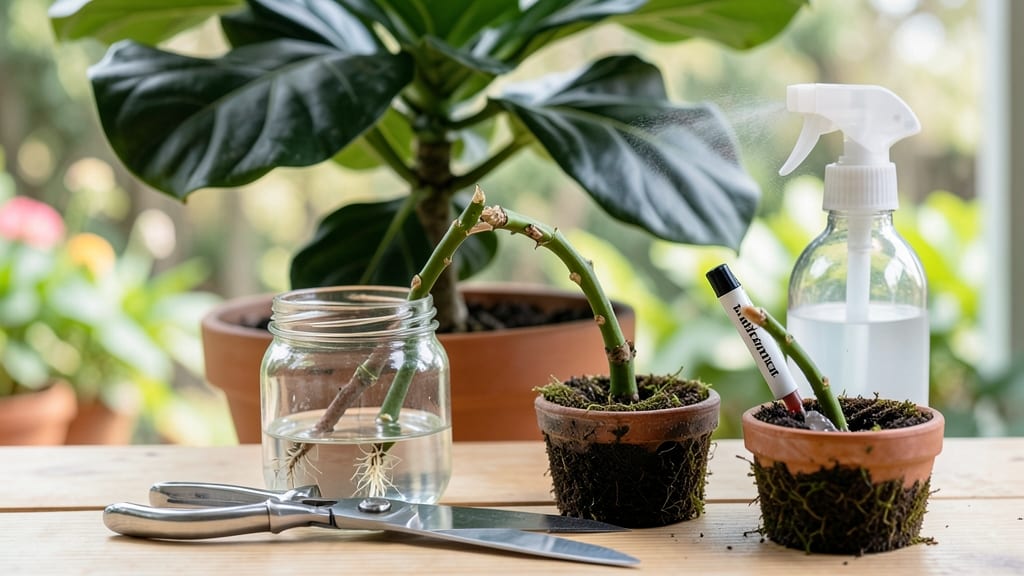
Fiddle leaf fig propagation turns one plant into three with surprisingly fast results. 🌱 I’ve rooted cuttings in just 2-3 weeks—no green thumb required—using methods that work for beginners and pros alike.
The key? Healthy stems, the right timing, and a little patience (though the roots grow faster than you’d expect).
You’ll need sharp pruning shears, a clean jar of water or well-draining soil mix, and a humid spot—like a bathroom or covered tray. Fiddle leaf figs root best in spring or early summer when the plant is actively growing, but even winter cuttings can work with extra care.
The magic happens when you pick the right stem: 4-6 inches long with at least two leaves and a node where roots form.
By the time you see roots peeking through the jar or soil, you’ll have a ready-to-pot cutting. These new plants grow just like the mother fig—bold leaves, glossy stems, and that same impossible-to-kill energy.
The best part? You can skip the water method entirely and root directly in soil for even stronger starts.
Even if your first few cuttings fail (rot happens), you’ll learn what works for your space. With the right setup, you’ll have three fiddle leaf figs where you once had one—all without spending a dime. Ready to multiply your collection?
📚 In This Guide
- What you need
- Instructions
- Tips and common mistakes
- Wrapping up and next steps
What you need
- ● Healthy mother plant: A mature fiddle leaf fig with at least 2–3 healthy stems (avoid overwatered or stressed plants).
- ● Sharp, sterilized pruning shears or knife: Clean with rubbing alcohol to prevent disease (1 pair).
- ● Cutting: 4–6 inch stem cutting with at least 2–3 leaves (include 1–2 leaf nodes).
- ○ Rooting hormone (optional but recommended): Powder or gel (e.g., Clonex or Rootone) to boost root growth.
- ● Clean glass or jar: 8–12 oz size (wide-mouth preferred for airflow).
- ● Filtered or distilled water: Tap water can inhibit rooting (change weekly).
- ● Rubbing alcohol (50% solution): For sterilizing the cutting’s base (small bottle).
- ○ Plastic wrap or humidity dome (optional): To retain moisture while roots form.
- ● Well-draining potting mix: 50% peat/perlite/coco coir blend (1 small pot, 4–6 inches).
- ● Perforated nursery pot or propagation tray: With drainage holes (1 per cutting).
- ● Spray bottle: For gentle hydration (8 oz).
- ○ Clear plastic bag or dome (optional): To create a humid microclimate.
Step-by-step instructions for fiddle leaf fig propagation
Here’s how to multiply your fiddle leaf figs quickly—whether you prefer water or soil methods.
🌱 Step 1: Select and Prep Healthy Cuttings
Choose a healthy stem with at least 4-5 leaves and a few inches between nodes (the bumps where roots grow). Use clean, sharp scissors to cut just below a node at a 45-degree angle—this gives more surface area for roots to form. I always pick a stem with at least 3 leaves to ensure the cutting has enough energy to survive.
Let the cut end dry for 1-2 hours—this prevents rot. Place the cutting in a shady spot while you prepare the propagation setup. If you’re using water, skip this step and move straight to soaking. For soil, let the cut callus over slightly to avoid fungal issues.
💧 Step 2: Choose Your Propagation Method
For water propagation, fill a clean glass with room-temperature water (never tap water—use filtered or distilled to avoid chlorine). Submerge the cut end 1-2 inches deep, leaving the leaves above the waterline. Change the water every 3-5 days to prevent bacteria. Roots usually appear in 2-4 weeks—watch for tiny white tendrils near the node.
For soil propagation, mix 1 part perlite with 1 part potting mix to improve drainage. Dip the cut end in rooting hormone (optional but speeds growth) and plant it 1-2 inches deep in the mix. Keep the soil lightly moist—never soggy. Place the pot in a bright, indirect light spot (no direct sun yet). Roots take 4-6 weeks to form.
☀️ Step 3: Monitor and Encourage Root Growth
If propagating in water, keep the glass in bright, indirect light—avoid direct sun, which can overheat the water. You’ll see roots in 2-4 weeks, but don’t rush to transplant. Wait until roots are at least 2 inches long before moving to soil. This ensures they’re strong enough to support the plant.
For soil propagation, mist the cutting every 2-3 days to maintain humidity. Avoid overwatering—fiddle leaf figs hate wet roots. After 4-6 weeks, gently tug the cutting. If you feel resistance, roots have formed. If not, wait another week.
🌿 Step 4: Transplant and Care for New Plants
Once roots are established, transplant water-propagated cuttings into well-draining potting mix. Use a pot 2-3 inches larger than the root ball to avoid overpotting. Water lightly and place in bright, indirect light for a week to help it adjust. Avoid fertilizing for 2-3 months—new roots are still developing.
Soil-propagated cuttings can stay in their small pots for a few weeks. Once you see new growth, gradually introduce them to medium light and reduce misting. Fiddle leaf figs are sensitive—if leaves yellow or drop, they’re getting too much water or light.
⏰ Step 5: Maintain Humidity and Light for Success
New cuttings need 60-70% humidity for the first month. Group them with other plants or use a humidity tray (pebbles + water) to create a mini greenhouse effect. Avoid drafts or temperature swings—fiddle leaf figs thrive in 65-75°F conditions.
After 8-12 weeks, your new plants should look like mini versions of the parent. Keep them in bright, indirect light and water only when the top inch of soil is dry. Patience is key—rushing leads to weak, leggy plants that struggle to adapt.
Tips & tricks for perfect fiddle leaf fig propagation
Avoid these common pitfalls—and watch your fiddle leaf figs grow roots like a pro.
Cutting Selection: Look for stems with 4-5 leaves but don't go overboard—thicker stems take longer to root. I've found that stems with 3-4 leaves actually root faster because they're less energy-intensive for the plant. The key is finding a balance between size and vigor.
Water Quality Matters: Never use tap water for water propagation—chlorine and fluoride can inhibit root growth. Instead, use filtered, distilled, or even rainwater. If you must use tap water, let it sit out uncovered for 24 hours to allow chlorine to evaporate before using it. This simple step can cut your propagation time by nearly a week.
Light Positioning: Place your propagation setup in bright, indirect light—think east-facing window or a few feet back from a south-facing window. Direct sunlight can overheat the water (causing algae growth) or scorch soil-propagated cuttings. I've seen water turn green with algae in just 3-5 days when exposed to direct sun, which stresses the cuttings.
Root Length Check: Wait until roots reach at least 2 inches before transplanting—this ensures they're strong enough to support the plant. I test root strength by gently tugging: if the cutting resists, it's ready. For water propagation, you'll often see roots growing at different rates—wait for the longest root to reach 2 inches before moving to soil.
Pro Tips for Fiddle Leaf Fig Plant Propagation
- Avoid these common pitfalls—and watch your fiddle leaf figs grow roots like a pro.
- Cutting Selection: Look for stems with 4-5 leaves but don't go overboard—thicker stems take longer to root.
- Water Quality Matters: Never use tap water for water propagation—chlorine and fluoride can inhibit root growth.
Frequently asked questions
Got questions about propagating your fiddle leaf fig? You’re not alone! Here are some of the most common concerns—and their answers—to help you grow confidently.
Can I propagate a fiddle leaf fig from a single leaf?
Nope! Fiddle leaf figs must be propagated from a stem cutting with at least one leaf node (the bump where leaves grow). A single leaf won’t produce roots—it’ll just wilt. Aim for a 4-6 inch stem with 2-3 nodes for the best success.
How long does it take for roots to grow in water?
Patience is key! Roots typically appear in 2-4 weeks in water, but some stubborn cuttings may take up to 6-8 weeks. Keep the water fresh, avoid direct sunlight, and change it every 3-5 days to speed things up. Pro tip: Use room-temperature water to prevent shock.
Should I propagate in water or soil?
Both work, but water is beginner-friendly because you can monitor root growth easily. Once roots hit 2-3 inches, transplant to soil. For soil propagation, use a well-draining mix (like perlite + potting soil) and keep it moist but not soggy. Water propagation is faster for observation, while soil mimics real growing conditions.
Why is my cutting rotting instead of rooting?
Overwatering or bacterial/fungal infections are usually the culprits. If your cutting feels mushy or smells foul, it’s rotting. Fix it: Trim the rotten part, let it dry for a day, and replant in fresh, sterile medium (water or soil). Use a rooting hormone to boost survival, and avoid overcrowding cuttings in one container.
Can I propagate a fiddle leaf fig from a store-bought plant?
Yes, but check for pests first! Inspect the plant for spider mites, mealybugs, or aphids—these can spread to your cuttings. If clean, take 4-6 inch cuttings from healthy stems (avoid the top growth, which may be too young). Store-bought plants are fine, but quarantine them for a week before propagating to play it safe.
Wrapping up and next steps
Propagating your fiddle leaf fig is simpler than you think—whether in water or soil, patience and care are your best tools! 🌱 With the right materials and techniques, you’ll soon be expanding your plant family or sharing stunning cuttings with fellow plant lovers. Now that you’re armed with knowledge, why not try it today? Start with one cutting, follow the steps, and in just a few weeks, you could have a thriving new plant to brighten up your space.
Pro tip: Document your progress with photos—it’s the perfect way to track growth and celebrate small victories! 📸