
Plants
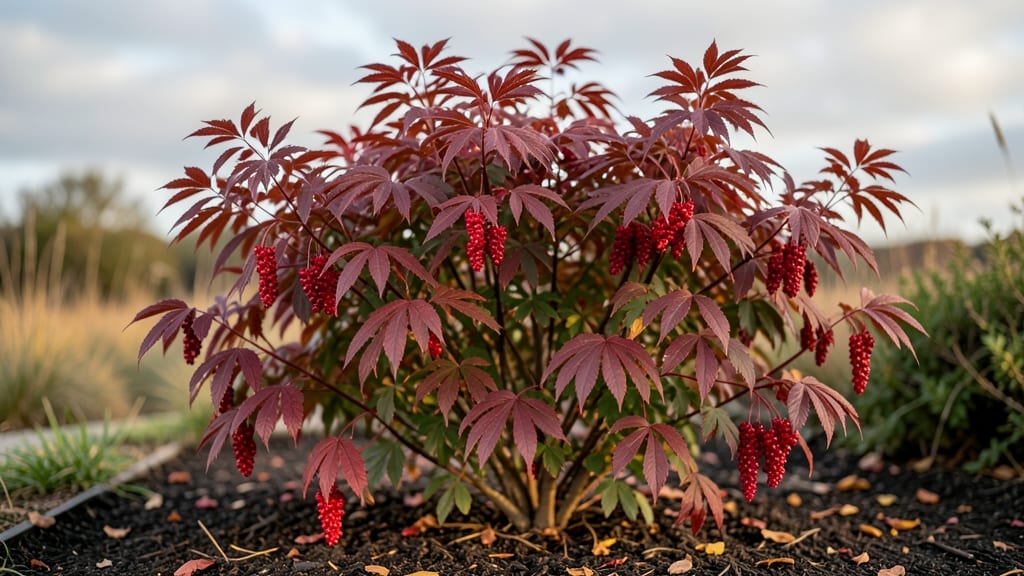
Growing cutleaf staghorn sumac means bold, three-season color with almost no work from you. 🌿 This native shrub thrives on neglect, turning your yard into a wildlife magnet while requiring less care than most ornamentals.
The secret lies in its adaptability—drought-tolerant, pest-resistant, and happy in poor soil—making it the perfect plant for busy gardeners or challenging sites.
Start with full sun to partial shade and well-draining soil (even rocky or sandy spots work). Plant bare-root in early spring or fall, spacing shrubs 10-15 feet apart for their eventual 12-15-foot spread.
Water deeply once after planting, then let nature take over—this sumac handles drought like a pro. The real magic happens in fall, when its bright red foliage outshines anything in the neighborhood.
Pruning is optional but keeps the form tidy: trim back leggy stems in late winter to encourage dense growth. Birds and butterflies will flock to its berries, and deer leave it alone.
Even in tough climates (zones 3-9), this sumac stays vibrant and healthy with almost no fuss. For maximum impact, plant three together—they create a stunning natural hedge.
Common mistakes? Overwatering (it hates soggy roots) or planting too close to structures (it spreads). If growth seems slow, check soil drainage—this plant’s superpower is surviving tough conditions.
With zero high-maintenance demands, cutleaf staghorn sumac proves that stunning gardens don’t require constant work—just the right plant in the right spot.
📚 In This Guide
- What you need
- Instructions
- Tips and common mistakes
- Wrapping up and next steps
What you need
- ● Plant: 1–3 Rhus typhina (Cutleaf Staghorn Sumac) seedlings or bare-root plants (check local nurseries or online plant shops for disease-free stock).
- ○ Optional: A potted specimen (3–5 gallons) for container gardening.
- ● Soil: Well-draining sandy loam or clay-loam soil (pH 6.0–7.5). Sumac thrives in poor soil—no need for rich compost!
- ○ Optional: A handful of sand or grit (if your soil is heavy clay) to improve drainage.
- ● Location: Full sun to partial shade (6+ hours of sunlight daily for best foliage color).
- ● Pro Tip: 💡 Avoid soggy spots—sumac hates "wet feet"!
- ● Tools: Trowel or shovel (for planting).
- ● Garden gloves (to protect your hands from thorns).
- ○ Optional: Mulch (2–3 inches of pine straw or wood chips to retain moisture and suppress weeds).
- ● Water: Watering can or hose with a gentle spray nozzle.
- ○ Optional: Drip irrigation system (for automated care).
Step-by-Step instructions for planting and caring for cutleaf staghorn sumac
This drought-tolerant beauty thrives with minimal effort—here’s how to establish it for vibrant, year-round foliage.
🌱 Step 1: Choose the Perfect Planting Site and Prepare the Soil
Cutleaf staghorn sumac adores full sun but tolerates partial shade, making it versatile for most landscapes. Select a spot with at least 6 hours of direct sunlight daily—though it will survive with less, the foliage’s dramatic red hues deepen with more exposure. Avoid low-lying areas where water pools, as soggy roots lead to root rot.
Test the soil’s drainage by digging a 6-inch hole—if water lingers after 10 minutes, amend the area with 2-3 inches of coarse sand or gravel mixed into the top 12 inches of soil. This plant thrives in poor, rocky, or sandy soils, so skip the fertilizer. Simply loosen the soil to encourage root spread.
🪴 Step 2: Plant Bare-Root or Container-Grown Sumac Correctly
If planting bare-root, soak the roots in lukewarm water for 1 hour before handling to revive them. For container-grown plants, remove it from the pot and gently tease apart any circling roots with your fingers. Place the root ball into the hole so the top of the root flare sits 1 inch above ground level—burying too deep suffocates the plant.
Backfill the hole with native soil, pressing lightly to eliminate air pockets but not compacting. Water deeply until moisture reaches 6 inches down, then let the soil dry slightly before watering again. Mulch with 2-3 inches of wood chips or pine straw, keeping it 3 inches away from the trunk to prevent rot. This mulch layer suppresses weeds and retains moisture without smothering roots.
☀️ Step 3: Water Deeply and Infrequently to Build Drought Resistance
Newly planted sumac needs 1 inch of water per week for the first 2 months, but resist the urge to water more frequently. Overwatering drowns roots, while deep, infrequent watering encourages a robust root system. After the initial establishment period, sumac thrives on rainfall alone—its deep roots access water during dry spells.
Check moisture by sticking your finger 2 inches into the soil. If it feels dry, water slowly until moisture reaches 6 inches down. During extreme drought, you’ll see leaves curl slightly—this is normal and temporary. Once roots establish (usually by 6-12 months), the plant becomes nearly indestructible.
✂️ Step 4: Prune Strategically for Shape and Health
Sumac requires minimal pruning, but removing dead or crossing branches in late winter or early spring keeps the plant tidy. Use clean, sharp pruners to cut just outside the branch collar—the swollen area where the branch meets the trunk. Avoid heavy pruning, as sumac responds best to light shaping. If a branch breaks during storms, simply remove it at the base to maintain the plant’s natural form.
Watch for signs of stress like yellowing leaves or stunted growth—these often indicate overwatering or poor drainage. If you notice powdery mildew (a white, powdery coating on leaves), improve airflow by thinning dense branches. Sumac rarely suffers from pests, but if aphids appear, a strong spray of water usually dislodges them without chemicals.
⏰ Step 5: Enjoy Year-Round Interest With Minimal Maintenance
Once established, cutleaf staghorn sumac requires almost no care. Its feathery, fern-like leaves turn brilliant red in fall and winter, providing seasonal color without extra effort. In spring, new growth emerges in vibrant green, creating a striking contrast. The plant’s berry-like clusters also attract birds, adding another layer of ecological benefit.
Fertilizer is unnecessary—sumac grows happily in nutrient-poor soils. If you notice stunted growth after 3 years, a light application of 5-10-10 fertilizer in early spring (half the recommended dose) can encourage vigor, but most sumac thrives without it. With proper planting and occasional pruning, this plant will reward you with decades of effortless beauty.
Tips & tricks for perfect cutleaf staghorn sumac care
Between us, sumac thrives when you work with its natural resilience—not against it. Here’s how to maximize its drought-resistant beauty without overcomplicating things.
Sunlight Strategy: While the instructions mention at least 6 hours of sun daily, I’ve found that positioning your sumac where it gets morning sun and afternoon shade (especially in hot climates) actually intensifies those fall red hues. The plant handles partial shade better than you’d expect, but those vibrant colors? They’re sun-powered. Think of it as giving your sumac a golden-hour boost.
Soil Test Shortcut: That 10-minute drainage test in Step 1 is crucial, but here’s a pro move: mix in 1 part perlite to 3 parts native soil when amending heavy clay. This creates instant drainage channels without needing to dig deeper. I’ve used this trick with sumac in compacted urban soils, and the roots spread like they’re in a five-star greenhouse.
Watering Wisdom: The 1 inch per week rule is perfect, but I’ve learned to water in the early morning when evaporation rates are lowest. This means the moisture actually reaches those 6 inches deep instead of just sitting on the surface. Plus, you’ll avoid the fungal risks that come with evening watering—sumac may be tough, but it’s not invincible.
Pruning Precision: When trimming in Step 4, focus on removing branches that cross or rub—these are the weak points where diseases enter. I always sanitize my pruners with rubbing alcohol between cuts, and I’ve never had a single issue with infections. The key is making clean cuts just outside the branch collar; this lets the plant heal like a pro.
Pro Tips for Cutleaf Staghorn Sumac
- Between us, sumac thrives when you work with its natural resilience—not against it.
- The plant handles partial shade better than you’d expect, but those vibrant colors?
- Soil Test Shortcut: That 10-minute drainage test in Step 1 is crucial, but here’s a pro move: mix in 1 part perlite to 3 parts native soil when amending heavy clay.
Frequently asked questions
Got questions about growing cutleaf staghorn sumac? You’re not alone—this hardy, low-maintenance plant is a favorite, but it’s smart to know the basics before diving in. Here are some of the most common queries, answered for you!
Is cutleaf staghorn sumac really "zero fuss"? What’s the catch?
This sumac thrives on neglect—it’s drought-tolerant, pest-resistant, and handles poor soil like a champ. The catch? It’s not a showstopper for formal gardens; its wild, feathery foliage is best in naturalized areas, meadows, or as a backdrop. If you want neat, manicured plants, this isn’t it—but if you love effortless beauty, it’s perfect!
How fast does cutleaf staghorn sumac grow, and when will I see results?
Expect 3–5 feet per year in ideal conditions (full sun, well-draining soil). Most growers see noticeable height and spread within 1–2 seasons. By year three, you’ll likely have a lush, multi-stemmed shrub with those iconic red-orange fall berries. Patience pays off—it’s a slow-and-steady winner!
Can I grow cutleaf staghorn sumac in containers? If so, how big should the pot be?
Yes, but it’s not ideal long-term. Start with a 15–20 gallon pot for young plants, but know it’ll outgrow containers quickly. If you must pot it, use fast-draining soil and prune roots annually. For best results, plant in the ground—this sumac’s roots love to stretch!
Do I need to worry about pests or diseases with cutleaf staghorn sumac?
Hardly! This sumac is naturally resistant to most pests and diseases. Occasional issues might include:
- Spider mites (if severely drought-stressed—water deeply instead of often).
- Leaf spot (rare, but improve airflow if it happens).
- Deer/browsing (they usually avoid it, but protect young plants if needed).
What’s the best alternative if I want a sumac look but need something more compact?
If space is tight, consider:
- Fragrant sumac (Rhus aromatica) – Compact (3–5 ft), great for edges.
- Dwarf sumac (Rhus typhina ‘Bailtiger’) – Stays under 3 ft tall.
- Staghorn sumac (Rhus typhina) – Similar but slightly taller (6–10 ft).
Wrapping up and next steps
The cutleaf staghorn sumac is a stunning, low-maintenance plant that brings vibrant color and texture to any landscape—without the fuss! 🌿 With its drought tolerance, adaptability, and year-round appeal, it’s the perfect choice for busy gardeners or eco-conscious enthusiasts.
Whether you’re a beginner or a seasoned pro, this hardy shrub rewards effortlessly.
Ready to transform your outdoor space? Start by choosing the perfect spot—then watch your sumac thrive with minimal care. Happy planting! 🌱