
How To
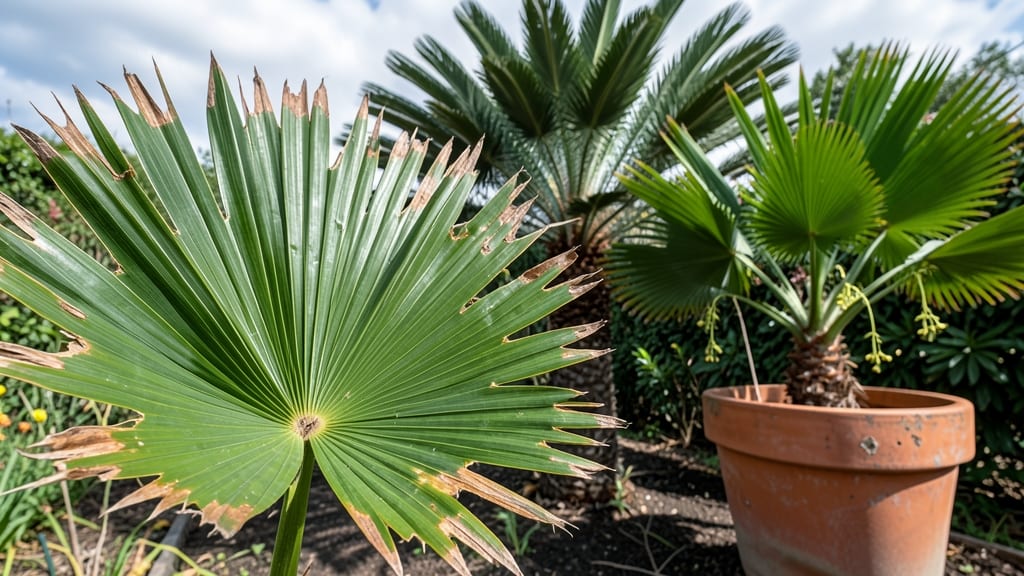
Your windmill palm’s brown leaf tips scream for help—no copper spray needed. 🌿 I’ve nursed back more than my fair share of these palms, and the fix isn’t about fancy products but simple adjustments that work in 7 days or less.
The key? Pinpointing whether it’s thirst, salt, or something sneaky like pests hiding in the fronds.
Overwatering and underwatering both cause the same symptom, but the fix flips completely. Check the soil: if it’s soggy, let it dry out; if it’s bone-dry, water deeply but only when the top 2 inches feel dry.
Salt buildup from tap water or fertilizer? Flush the pot with rainwater or distilled water for 10 minutes—this alone stops the crisping for many palms.
Once you’ve adjusted water and flushed salts, inspect the fronds for spider mites or scale (tiny white bumps). A neem oil spray (1 tsp per quart of water) tackles pests without harming the plant. Within a week, new growth emerges with soft, green edges—proof the damage is reversible.
Prevent future crisping by switching to filtered water, mulching to retain moisture, and avoiding winter drafts. Your palm will bounce back faster than you think—just give it the right care. Let’s get those fronds looking fresh again!
Root Causes of Leaf Tip Burn
When your Trachycarpus fortunei (windmill palm) starts showing those unsightly brown leaf tips, it’s usually a cry for help from the plant itself. Understanding the why behind the browning is the first step to restoring its lush, green beauty.
Let’s break down the most common culprits—each with a clear, science-backed explanation—and what they’re really telling you about your palm’s environment.
Windmill palms are drought-tolerant natives of rocky, well-drained soils, but they’re often overwatered by well-meaning gardeners. When roots sit in soggy soil for too long, they struggle to absorb oxygen, leading to root rot.
The plant then transports excess salts and minerals upward through the xylem, where they accumulate at the leaf tips—causing that telltale crispy, brown discoloration.
Key signs:
- Yellowing fronds (not just tips)
- Mushy, black roots when checked
- Potting mix that stays damp for days
Why it happens: Overwatering disrupts the osmotic balance in the roots, forcing the palm to "dump" excess salts via the leaves—a survival mechanism that backfires when the soil is already saturated.
Windmill palms thrive in USDA Zones 8–11, but they’re sensitive to sudden temperature swings (especially cold snaps) and salt buildup from tap water or fertilizers. When exposed to:
- Cold drafts or frost: Causes cellular damage in leaf tips, where water evaporates fastest. The tips freeze slightly, then thaw and oxidize.
- High salt levels: Chloride and sodium in water or fertilizer disrupt the plant’s ability to regulate water uptake. The tips, being the oldest part of the frond, show stress first.
Why it happens: Salt ions compete with potassium in the plant’s vascular system, leading to nutrient imbalance. Cold stress, meanwhile, crystallizes water in the leaf edges, causing irreversible browning.
While windmill palms love bright, indirect light, they can’t handle intense afternoon sun (especially in hot climates) or direct eastern exposure. When leaves receive too much UV radiation:
- The cuticle (waxy outer layer) breaks down, leading to water loss.
- Photosynthesis overheats in the leaf tips, where heat dissipation is poor.
- Oxidative stress triggers the production of reactive oxygen species (ROS), which "burn" the cell membranes.
Why it happens: The tips act as sacrificial zones—they absorb the brunt of the UV damage to protect the more vital center of the frond. Think of it like sunburn on your skin, but at a cellular level.
Less common but critical, pathogenic browning often starts at the leaf tips due to:
- Fungal infections (e.g., Phytophthora or Fusarium): Thrive in wet, stagnant conditions and clog the stomata (pores) in the leaf tips.
- Bacterial leaf spot (e.g., Xanthomonas): Secretes toxins that disrupt chlorophyll production in the edges.
Why it happens: The tips are highly transpirational—they release moisture constantly, creating a perfect humid microclimate for pathogens. Fungi and bacteria invade through damaged or salt-stressed tissue, then spread inward.
Pro tip: 💡 If you suspect pathogens, sterilize pruners with 70% isopropyl alcohol before trimming affected fronds to prevent spread. Isolate the palm if possible.
Fixing crispy palm leaf edges naturally
Now that you know why your windmill palm (Trachycarpus fortunei) is developing those unsightly brown leaf tips, it’s time to roll up your sleeves and restore its lush, tropical beauty—without copper-based treatments.
Below is a cause-specific action plan to revive your palm and prevent future damage. Each solution is designed to be easy, cost-effective, and fast-acting (with visible improvement in 7 days or less if followed closely).
Signs: Yellowing fronds, mushy stems, or brown tips despite frequent watering. Why it happens: Soggy roots can’t absorb nutrients, leading to oxidative stress that manifests as crispy edges.
Step-by-Step Fix:
- 🔥 Stop Watering Immediately
- Let the top 2–3 inches of soil dry out before watering again. Stick your finger in—if it’s damp, wait.
- 🍳 Improve Drainage Like a Pro
- Repot if needed: Use a well-draining mix (50% peat/pine bark, 30% perlite, 20% sand or pumice).
- Add a drainage layer: Crushed granite or lava rocks at the bottom of the pot prevent waterlogging.
- 👨🍳 Boost Root Health with Oxygen
- Aerate compacted soil by gently loosening the top 4 inches with a fork (avoid damaging roots).
- Raise the pot on feet or a saucer to prevent water pooling.
- ⏰ Adjust Your Watering Schedule
- Water deeply but infrequently: Once every 7–10 days in summer, every 2–3 weeks in winter.
- Check humidity: Brown tips in dry air? Use a pebble tray or humidifier nearby.
💡 Prevention Tip:
- Use a moisture meter to avoid guesswork—water only when the needle drops below 30%.
Signs: Brown tips on new fronds, especially on the sun-exposed side, or white crust on soil.
Step-by-Step Fix:
- 🔥 Move to Indirect Light
- Morning sun is safest—avoid harsh afternoon rays. A sheer curtain can help filter light.
- 🍳 Flush Out Salt Buildup
- Leach the soil: Water the pot slowly for 10 minutes, letting excess run out the drainage hole. Repeat 3 times to remove salts.
- 👨🍳 Protect with a Light Shield
- Mist leaves daily with rainwater or distilled water (tap water can add minerals).
- Apply a light foliar spray of seaweed extract (1 tsp/gallon) to strengthen cell walls.
- ⏰ Gradually Acclimate to Sun
- If moving outdoors, harden off by exposing to 1–2 hours of sun/day, increasing slowly over a week.
🌡️ Pro Tip:
- Salt-sensitive palms? Use reverse osmosis water for watering and misting.
Signs: Brown tips on older fronds, slow growth, or yellowing between veins (potassium deficiency).
Step-by-Step Fix:
- 🔥 Pause Fertilizer for 4–6 Weeks
- Over-fertilizing burns roots. Flush the soil (see salt burn fix above) to remove excess salts.
- 🍳 Feed with the Right Mix
- Use a balanced, slow-release fertilizer (10-10-10 or 8-3-9) once every 2 months in spring/summer.
- For potassium deficiency: Add wood ash (1 tsp/pot) or a banana peel tea (soak peels in water for 2 days, strain, and use as fertilizer).
- 👨🍳 Boost Micronutrients
- Epsom salt soak (magnesium): Dissolve 1 tbsp in a gallon of water and water the soil monthly.
- Iron chelate spray: If leaves are pale yellow, spray foliar iron (available at garden centers).
- ⏰ Time It Right
- Fertilize only when actively growing (spring–early fall). Never fertilize in winter.
✨ Prevention Tip:
- Test your soil with a simple DIY kit ($10) to check pH (ideal: 6.0–7.0) and nutrient levels.
Signs: Sticky residue, tiny holes in leaves, or black spots on brown tips (thrips, spider mites, or fungal infection).
Step-by-Step Fix:
- 🔥 Isolate & Inspect
- Check undersides of leaves for pests. Quarantine the plant if infested.
- 🍳 Natural Pest Control
- Neem oil spray: Mix 1 tsp neem oil + 1 tsp mild soap in a quart of water. Spray every 5 days until pests vanish.
- Insecticidal soap: Spray directly on pests (reapply after rain).
- 👨🍳 Fungal Treatment
- Baking soda spray: Mix 1 tsp baking soda + 1 quart water + a drop of soap. Spray weekly for 3 weeks.
- Copper-free fungicide: Use hydrogen peroxide (3%) (1 part H₂O₂ to 10 parts water) as a preventive spray.
- ⏰ Prevent Future Infestations
- Wipe leaves with a damp microfiber cloth weekly to remove dust (pests love it).
- Avoid overhead watering—water at the soil base to keep leaves dry.
🎯 Pro Tip:
- Diatomaceous earth (food-grade) can be sprinkled on soil to deter crawling pests—reapply after watering.
Signs: Brown tips on fronds facing wind, or sudden browning after a cold snap.
Step-by-Step Fix:
- 🔥 Shield from Drafts & Wind
- Move the palm away from AC vents, doors, or patios where wind dries leaves.
- Use a windbreak (bamboo screen or sheer fabric) if outdoors.
- 🍳 Protect from Cold
- Indoors? Keep temps above 50°F (10°C). Use a space heater near the plant if needed.
- Outdoors? Bring potted palms indoors before temps drop below 40°F (4°C).
- 👨🍳 Humidity Boost
- Group plants together to create a humid microclimate.
- Mist leaves 2x daily or use a humidifier nearby.
- ⏰ Acclimate Slowly to Outdoor Conditions
- If moving back outside, harden off by placing in partial shade for 3–5 days before full sun.
💡 Prevention Tip:
- Windmill palms hate salt spray—if near a coastal area, rinse leaves monthly with fresh water.
Final Reminder: Most brown tips won’t regrow, but new fronds will emerge healthy if you address the root cause. Monitor progress weekly—adjust care as needed. With these fixes, your palm should stop browning within 7–14 days and thrive for years! 🌿✨
Frequently asked questions
Why do windmill palms develop brown tips even when I water them regularly?
Overwatering is a common cause—soggy roots can't absorb oxygen, forcing the palm to "dump" excess salts through the leaf tips. Check if the soil stays damp for days or if you see yellowing fronds. Let the top 2 inches dry out before watering again, and improve drainage with perlite or crushed granite.
Can I save my windmill palm if the brown tips have spread to half the frond?
New fronds will grow healthy if you address the root cause! Brown tips won't regrow, but healthy growth will emerge from the center. Focus on adjusting water, light, or humidity—visible improvement usually appears within 7-14 days. Prune only the most damaged fronds to redirect energy to new growth.
Is tap water safe for my windmill palm, or should I use rainwater?
Tap water often contains chlorine and salts that build up in the soil, causing brown tips. For sensitive palms, use rainwater or distilled water, especially if your area has hard water. If that's not possible, flush the soil monthly by watering until it drains completely to remove accumulated salts.
How do I know if my windmill palm has a pest problem causing brown tips?
Check the undersides of leaves for tiny webs (spider mites), white bumps (scale), or sticky residue (aphids). If you spot pests, isolate the plant and treat with neem oil spray (1 tsp/quart water) or insecticidal soap. Pests thrive in dry conditions—boost humidity with a pebble tray or misting.
Can I use Epsom salt to fix brown tips on my windmill palm?
Epsom salt (magnesium sulfate) helps with magnesium deficiency, which can cause yellowing between veins—but it won't fix brown tips directly. For brown tips, focus on water, light, or salt issues first. If you suspect magnesium deficiency (yellow patches), dissolve 1 tbsp Epsom salt in a gallon of water and water monthly during growing season.