
Diseases
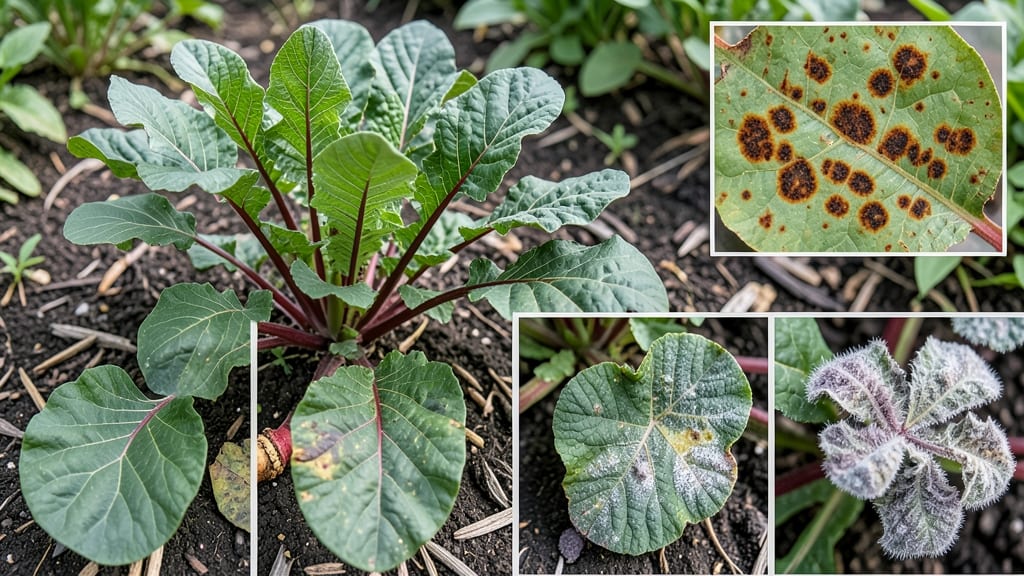
Identifying beet leaf diseases early saves your harvest from crunchy, shriveled leaves. 🌱 I’ve watched powdery mildew turn vibrant greens into ghostly white in just days—until I learned the first signs to watch for.
The key is catching those tiny specks or wilting edges before they spread like wildfire across your plants.
Most beet leaf diseases start with waterlogged soil or crowded plants, giving fungi and bacteria the perfect breeding ground. Powdery mildew appears as chalky white dust, while downy mildew leaves yellow, greasy patches on the undersides.
Leaf spots? They’re usually brown or black, with crispy edges that tell you the plant’s already fighting for its life.
Once you spot the problem, you can stop it fast with neem oil sprays or copper fungicides—both work before the disease takes hold. Prune infected leaves immediately (don’t compost them!) and space your plants wider to improve airflow. With these steps, your beets stay lush and disease-free all season.
This works for both garden beds and containers, and the same principles apply to Swiss chard and spinach too. The goal is early action—so you can enjoy those sweet, tender greens without the heartbreak of a ruined crop.
The Hidden Triggers Behind Leaf Issues
Beet leaf diseases rarely strike out of nowhere—they’re usually the result of a perfect storm of environmental stress, microbial invaders, or poor growing conditions. Understanding these root causes is the first step to prevention.
Let’s break down the science behind why your beet leaves develop unsightly spots, wilting, or other distress signals.
Most beet leaf diseases are caused by microscopic invaders that thrive under specific conditions. These pathogens exploit weaknesses in your plants, whether through wounds, humidity, or nutrient imbalances.
🍄 Fungal Overgrowth: The Silent Spread
Fungi like Cercospora beticola (causing leaf spot) or Peronospora farinosa (downy mildew) thrive in:
- High humidity: Fungal spores germinate best in damp conditions (70%+ humidity). Overhead watering or poor airflow creates the ideal breeding ground.
- Warm temperatures: Most fungal pathogens peak between 70–85°F (21–29°C). Heat stress weakens leaves, making them easier targets.
- Old or damaged leaves: Fungi enter through stomata (leaf pores) or wounds. Crowded plants with poor circulation are high-risk.
Actionable fix: Space plants 12–18 inches apart, water at soil level, and remove infected foliage immediately to starve spores.
🦠 Bacterial Blight: Fast and Foul
Bacteria like Xanthomonas campestris cause vascular wilting by clogging water-transport tissues. They spread via:
- Contaminated tools or hands: Bacteria hitchhike on pruners, gloves, or even rain splashes.
- Injured leaves: Hail, insects, or rough handling create entry points.
- Poor drainage: Waterlogged soil stresses roots, making plants more susceptible.
Actionable fix: Sterilize tools with 70% isopropyl alcohol, avoid overhead irrigation, and rotate crops to break bacterial cycles.
🦠 Viral Hitchhikers: Spread by Pests and Wind
Viruses (e.g., Beet curly top virus) rely on vectors like aphids or leafhoppers to jump from plant to plant. They thrive when:
- Pests are present: Aphids or thrips feed on infected plants, then transmit viruses while feeding on healthy ones.
- Weeds act as hosts: Plants like lambsquarters or pigweed harbor viruses and spread them to beets.
Actionable fix: Use row covers to block insects, remove weed hosts, and plant virus-resistant beet varieties like ‘Detroit Dark Red’.
Diseases often exploit environmental imbalances that weaken plants. Even without pathogens, these factors can trigger symptoms like wilting or yellowing.
💦 Overwatering and Poor Drainage
Beets need consistent moisture, but soggy soil leads to:
- Root rot: Pythium or Phytophthora fungi multiply in waterlogged conditions, cutting off nutrient uptake.
- Fungal leaf spots: Excess moisture on leaves creates a film that traps spores.
Actionable fix: Test soil drainage—amend clay soil with compost or sand. Water deeply but infrequently (1–1.5 inches per week).
☀️ Heat and Drought Stress
Extreme heat (above 90°F/32°C) or drought forces beets to:
- Close stomata: This reduces gas exchange, making leaves more prone to fungal infections.
- Produce bitter compounds: Stress weakens natural defenses, inviting pathogens.
Actionable fix: Mulch with straw to retain moisture, provide afternoon shade in peak summer, and harvest beets early if heat persists.
🌬️ Wind and Physical Damage
Strong winds or hail create:
- Open wounds: Entry points for bacteria and fungi.
- Desiccated leaves: Dry, cracked edges reduce photosynthesis and weaken the plant.
Actionable fix: Use windbreaks (e.g., cornstalks or mesh) and avoid planting beets in exposed, windy areas.
Even the healthiest soil can become a disease hotspot if basic gardening practices are overlooked.
🔄 Crop Rotation Failures
Planting beets (or other Chenopodium family crops like spinach) in the same spot yearly:
- Builds up soil-borne pathogens like Fusarium or Rhizoctonia.
- Encourages pest populations that spread viruses.
Actionable fix: Rotate with non-host crops like legumes (beans, peas) or brassicas (kale, broccoli) every 2–3 years.
🍄 Overcrowding and Poor Airflow
Tightly packed beet plants:
- Traps humidity, extending fungal spore survival.
- Blocks sunlight, weakening lower leaves.
Actionable fix: Thin seedlings to 3–4 inches apart and space rows 18–24 inches apart for airflow.
🌱 Nutrient Deficiencies or Excesses
Imbalances like:
- Low nitrogen: Causes yellowing (chlorosis), making leaves vulnerable to pathogens.
- Too much phosphorus: Encourages lush but weak growth, prone to collapse under stress.
Actionable fix: Test soil annually and amend with balanced fertilizer (e.g., 5-5-5). Avoid fresh manure near harvest.
Now that you know the “why,” the next step is proactive prevention—because stopping a disease at the source is always easier than treating it later.
How to Treat and Prevent Leaf Issues
Now that you’ve identified the culprit behind your beet leaves’ distress, it’s time to take action! The good news? Most beet leaf diseases and disorders can be managed—or even prevented—with a few targeted steps.
Below, we’ve mapped out practical fixes for each common cause, along with preventive measures to keep your greens thriving. Think of this as your beet leaf first-aid kit!
Fungal infections like powdery mildew, downy mildew, or leaf spot thrive in damp, crowded conditions. Act fast to cut off their food source (your leaves!) and disrupt their lifecycle.
🔥 Remove Infected Leaves Immediately
- How: Snip off any yellow, brown, or spotted leaves with clean scissors or pruners. Dispose of them in the trash (not compost)—fungi can survive in compost piles!
- Pro Tip: 🌡️ Morning is the best time to inspect and remove leaves.
Fungal spores release moisture overnight, making them more active in the early hours.
🍳 Boost Airflow Around Plants
- How: Thin out overcrowded plants so air circulates freely. Space beet plants 12–18 inches apart and avoid planting them too closely to other dense crops.
- Pro Tip: 💡 Use a fan on low speed near seedlings or young plants.
The gentle breeze mimics natural airflow and deters fungal spores from settling.
👨🍳 Apply Fungicidal Sprays (Organic or Chemical)
- For organic gardens:
- Baking soda spray: Mix 1 tsp baking soda + 1 tbsp vegetable oil + 1 tsp mild soap per quart of water.
Spray every 7–10 days (especially after rain). - Neem oil: Dilute 1 tbsp neem oil + 1 tsp soap per quart of water. Spray at dusk to avoid harming bees. - For severe cases: - Copper fungicide (like Bordeaux mixture) or sulfur-based sprays (follow label instructions). Reapply after rain.
⏰ Prevent Future Outbreaks - Rotate crops: Avoid planting beets (or other greens) in the same spot next year.
Fungal spores linger in soil. - Water wisely: Water at the base (not overhead) and early in the day so leaves dry quickly. - Choose resistant varieties: Some beet varieties (like ‘Detroit Dark Red’ or ‘Chioggia’) are less susceptible to fungal diseases.
Bacterial leaf spot or viral infections (like beet curly top) are trickier because they often have no cure. Your best defense? Prevention and containment.
🔪 Remove and Destroy Infected Plants
- How: Pull up entire infected plants (including roots) and bag them before tossing in the trash. Do not compost them.
- Pro Tip: 🎯 Check nearby plants for symptoms. If others are infected, remove them too to stop the spread.
🌡️ Sterilize Tools and Hands - How: Wash hands with soapy water after handling infected plants.
Disinfect pruners with rubbing alcohol (70%+) or a 10% bleach solution between uses. - Pro Tip: 💡 Keep a small spray bottle of diluted bleach (1 part bleach to 9 parts water) near your gardening tools for quick cleanups.
🌱 Prevent Spread to Other Plants
- Avoid overhead watering (bacteria spread via splashing water).
- Control pests (like aphids or flea beetles), which can transmit viruses.
- Use row covers early in the season to block insect vectors.
Yellowing, stunted, or discolored leaves often signal a nutrient imbalance. Adjust your soil or feeding routine to restore health.
📊 Test Your Soil (First Step!) - How: Use a home soil test kit (available at garden centers) or send a sample to a local extension office for analysis.
This tells you exactly what’s missing. - Pro Tip: 🌱 Test in early spring before planting. Soil pH should be 6.0–7.0 for beets.
💪 Apply Targeted Fertilizers
| Symptom | Likely Deficiency | Solution |
|---|---|---|
| Yellow lower leaves | Nitrogen | Side-dress with compost or blood meal (follow package rates). |
| Purple stems/leaves | Phosphorus | Use a bone meal or rock phosphate fertilizer at planting. |
| Weak, spindly growth | Potassium | Apply wood ash or a potassium-rich fertilizer (like greensand). |
| Pale green, slow growth | Magnesium/Calcium | Spray Epsom salt (magnesium sulfate) or crushed eggshells (calcium). |
🥗 Improve Soil Long-Term
- Add organic matter: Mix in 2–3 inches of compost before planting.
- Use mulch: Straw or grass clippings retain moisture and slowly release nutrients.
- Avoid over-fertilizing: Too much nitrogen leads to soft, susceptible leaves—fungi’s dream!
Heat stress, frost damage, or poor drainage can mimic diseases. Tweak your growing conditions to keep leaves happy.
🌞 Shield from Extreme Heat
- How: Provide afternoon shade with floating row covers or shade cloth (30–50%) during heatwaves.
- Pro Tip: 💡 Mulch heavily to keep roots cool. Use straw or wood chips (2–3 inches thick).
🌧️ Drainage Fixes for Waterlogged Soil
- How: If soil stays soggy, raise beds or add sand/perlite to improve drainage.
- Pro Tip: 🌱 Plant beets on mounds in heavy clay soil to prevent root rot.
❄️ Protect from Frost
- How: Cover seedlings with row covers or old blankets when temps drop below 40°F (4°C).
- Pro Tip: 🔥 Harvest before frost if leaves are already stressed—young leaves are more tender!
| Do This | Avoid This |
|---|---|
| Rotate crops every 2–3 years | Planting beets in the same spot yearly |
| Water at the base, not overhead | Leaving wet leaves overnight |
| Choose disease-resistant varieties | Ignoring early signs of stress |
| Clean tools between plants | Skipping soil tests |
| Use mulch to prevent soil splash | Overcrowding plants |
Beet leaf diseases and disorders are manageable—but they move fast. Check your plants weekly, especially after rain or heatwaves, and act at the first sign of trouble. With these strategies, you’ll minimize damage, save your harvest, and keep your garden thriving for seasons to come! 🌱✨
Frequently asked questions
What’s the difference between powdery mildew and downy mildew on beet leaves?
Powdery mildew appears as a chalky white dust on leaf surfaces, while downy mildew creates yellow patches with fuzzy gray growth on the undersides. The key difference? Powdery mildew thrives in dry heat, while downy mildew needs high humidity. Both spread rapidly if left untreated.
Can I still harvest beets if the leaves have diseases?
Yes, but focus on the roots, not the leaves! Diseased leaves may be bitter or tough, but the beet itself is usually safe to eat as long as it’s firm and healthy. Remove all infected foliage first to prevent further spread.
How do I know if my beet leaf spots are fungal or bacterial?
Fungal spots are usually dry and brown with crisp edges, while bacterial spots appear water-soaked and yellow with greasy edges. Fungal spots often have a white or gray center, while bacterial spots may ooze when wet. Check the undersides of leaves for fungal growth.
Will copper sprays harm beneficial insects like bees?
Copper fungicides are generally safe for bees when used correctly, but apply them at dusk or when bees aren’t active. Avoid spraying directly on flowers or blooming plants. Organic options like neem oil or baking soda sprays are even safer for pollinators while still controlling fungal diseases.
How often should I inspect my beet plants for early disease signs?
Check your plants every 3–5 days during warm, humid weather, and weekly in cooler conditions. Early morning is best—fungal spores are most active then. Look for tiny spots, discoloration, or unusual growth on both leaf surfaces. Catching issues early makes treatment much easier!