
Pruning
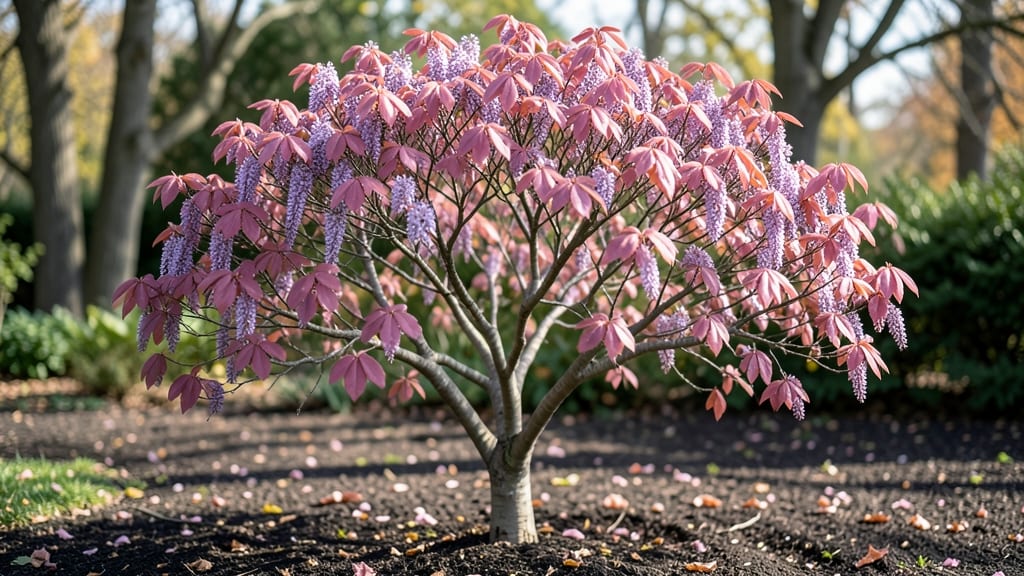
Popular pink leaf tree names include the Royal Poinciana (Delonix regia), Japanese Snowbell (Styrax japonicus), and Pink Dogwood (Cornus florida), each with unique foliage and care needs for sun, soil, and water.
Pink leaf trees get their stunning hues from anthocyanins, pigments that react to sunlight and temperature changes. 🌿 The Royal Poinciana, for example, bursts into fiery pinks in spring, while Japanese Snowbell displays delicate pinkish foliage year-round.
These trees aren't just showstoppers—they also attract pollinators and adapt well to different climates, making them perfect for both urban gardens and rural landscapes.
When choosing a pink leaf tree, consider your USDA hardiness zone and sunlight exposure. The Pink Dogwood thrives in partial shade, while Royal Poinciana demands full sun to maintain its vibrant color.
Most varieties prefer well-draining soil and moderate watering once established, though some like the Crape Myrtle can handle drought once mature.
💡 In This Article
- Why Pink Leaf Trees Turn Vibrant Colors
- Best Pink Leaf Trees for Your Climate and Garden
Why pink leaf trees turn vibrant colors
The stunning pink hues in leaf trees come from anthocyanins, water-soluble pigments that act like natural sunscreen for plants. These compounds protect leaves from excessive sunlight while also signaling maturity or stress responses.
In species like the Royal Poinciana, anthocyanin production peaks during spring when days lengthen and temperatures rise, triggering a biochemical cascade that converts clear chlorophyll into vibrant pinks and oranges. 🌸 The intensity of the color correlates directly with sunlight exposure—trees in full sun develop deeper pigments than those in shade.
Temperature plays a crucial role too. Most pink-leafed trees experience their most vivid colors when daytime temperatures hover between 70-85°F and nighttime temps stay above 55°F.
The Japanese Snowbell, for instance, maintains its soft pink foliage year-round in zones 6-9 because its native habitat in East Asia provides consistent mild temperatures. Meanwhile, soil pH affects pigment stability—slightly acidic soils (pH 5.5-6.5) enhance anthocyanin production, while alkaline soils can mute the colors.
This is why many pink-leafed trees thrive in well-draining, slightly acidic garden soils.
Genetics determine the timing and duration of color displays. Some trees like the Pink Dogwood produce anthocyanins in new growth as a protective mechanism against herbivores, while others like the Crape Myrtle develop pinkish tinges in fall as chlorophyll breaks down.
The duration varies too: Royal Poinciana's pink lasts 4-6 weeks in spring, while Japanese Snowbell maintains color year-round. This genetic diversity means gardeners can select trees based on whether they want seasonal bursts or continuous color.
Light quality matters beyond just intensity. Blue wavelengths in sunlight (300-500nm) trigger anthocyanin synthesis more effectively than red or green light. This is why pink-leafed trees often appear most vibrant on clear, sunny days when blue light dominates.
In cloudy conditions, their colors may appear washed out. 🌤️ The same principle explains why indoor plants rarely develop these pigments—they lack sufficient blue light exposure. For gardeners, this means positioning trees where they receive at least 6-8 hours of direct sunlight daily for optimal color development.
Stress can actually enhance pink hues in some species. Mild drought stress or nutrient deficiencies (particularly nitrogen) can trigger increased anthocyanin production as a survival mechanism. However, this is a double-edged sword—while it deepens colors, chronic stress reduces overall plant health.
The key is maintaining balanced care: watering when the top 2 inches of soil feel dry while ensuring the tree receives adequate nutrients through compost or slow-release fertilizers.
Consider these pigment triggers when selecting trees: anthocyanins respond most dramatically to combinations of sunlight exposure, temperature fluctuations, and soil conditions.
For example, the Pink Princess Smoke Tree develops its signature pink foliage when planted in full sun with well-draining soil, while the Weeping Cherry (Prunus subhirtella 'Pendula Rosea') produces pink blossoms in early spring regardless of leaf color.
Understanding these mechanisms lets you create garden conditions that maximize color intensity while maintaining plant vitality.