
Pests and Diseases
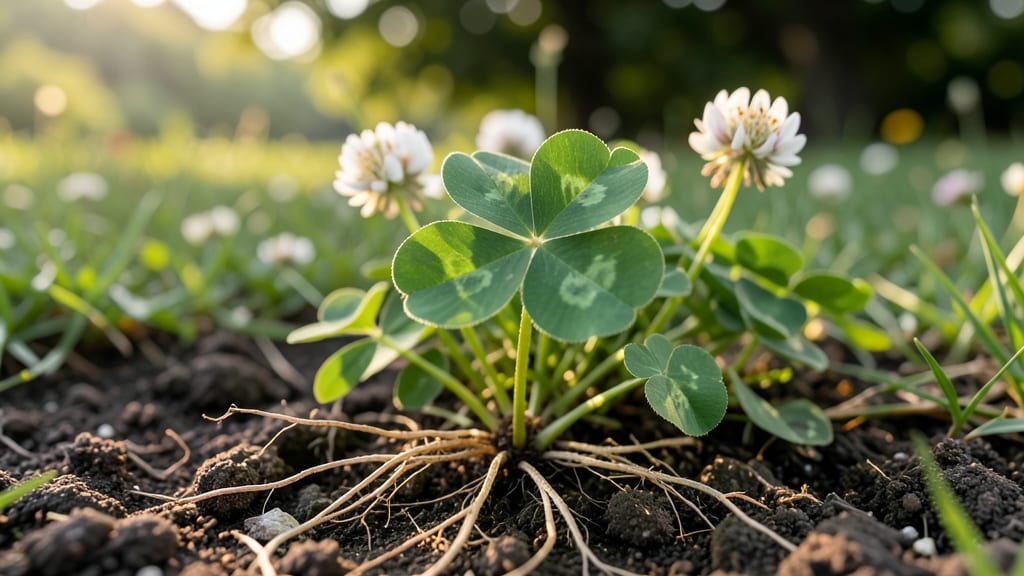
Growing 4 leaf cloverz successfully requires moist, well-drained soil with partial shade, and their prized four-leaf variants appear naturally through genetic mutations in standard three-leaf clovers. For best results, plant seeds in early spring and monitor your garden closely, as rare four-leaf specimens typically emerge by late summer.
These lucky plants aren't just about folklore—their extra leaves come from recessive genes that only show up when specific conditions align. 🌱 Most gardeners focus on white clover (Trifolium repens) because its four-leaf mutations are slightly more common than in red clover varieties.
The key to spotting them early is regular inspection during peak growth months (June-August), when the plants are most active.
I've found that slightly acidic soil (pH 6.0-6.5) and consistent moisture help trigger more mutations, though patience is essential since only about 1 in 10,000 clovers will develop the coveted fourth leaf.
Once you've identified your lucky finds, you can either leave them in place for continued growth or harvest them carefully by snipping the stems just above the soil line.
For dried arrangements, gather them on a sunny day when the leaves are fully unfurled, then hang them upside down in a dark, dry space for 2-3 weeks. The symbolic value makes them perfect for gifts—just be sure to handle them gently to preserve that magical fourth leaf!
💡 In This Article
- How Genetic Mutations Create Four-Leaf Cloverz
- Step-by-Step Guide to Growing and Harvesting Lucky Cloverz
How genetic mutations create four-leaf cloverz
The four-leaf clover's extra leaf emerges from a recessive genetic mutation in the Trifolium genus. Most clovers have three leaves due to a dominant gene that codes for three leaflets, but a rare recessive allele can produce an additional leaflet.
This mutation occurs randomly during cell division in the plant's meristem tissue, where growth happens. 🌱 The probability of this happening is extremely low—about 1 in 10,000 clovers—because the recessive gene must be inherited from both parents and then expressed under specific conditions.
Environmental factors like temperature, light exposure, and soil nutrients can influence mutation rates. For example, white clover (Trifolium repens) thrives in cooler climates (ideal range: 50-70°FTrifolium pratense) prefers slightly warmer conditions (60-75°F).
Both species need consistent moisture to support active cell division, which is when mutations are most likely to occur. Interestingly, studies show that clovers grown in slightly acidic soil (pH 6.0-6.5) exhibit higher mutation rates, possibly due to increased nutrient availability for genetic processes.
What makes this mutation fascinating is that the fourth leaf doesn't just appear randomly—it follows a specific developmental pattern. The extra leaflet typically forms from the same genetic blueprint as the others but develops later due to delayed expression of the recessive gene.
This is why you'll often see the fourth leaf slightly smaller or differently shaped than the others. The mutation isn't harmful to the plant; it's simply a variation that doesn't affect survival, which is why it persists in the gene pool despite its rarity.
Geneticists compare this to other plant mutations, like the extra petals in double-flowered varieties. However, four-leaf clovers are unique because the extra leaf doesn't alter the plant's reproductive structures—it's purely an ornamental trait. This makes them ideal for symbolic purposes without compromising the plant's ability to propagate.
The mutation rate remains consistent across generations unless selective breeding is applied, which is why wild four-leaf clovers are so scarce in nature.
If you're growing clovers specifically to find four-leaf variants, focus on white clover varieties like 'Dutch White' or 'Ladino'. These tend to produce slightly higher mutation rates due to their genetic makeup.
Red clovers, while beautiful, are less likely to yield four-leaf specimens, though they're prized for their vibrant color and longer stems. For best results, plant seeds in early spring when soil temperatures are stable at 55-60°F, as cooler temperatures slow early growth and may encourage more stable genetic expressions.
One common misconception is that four-leaf clovers are a separate species. In reality, they're identical to three-leaf clovers at the genetic level—only their leaf count differs. This is why they can cross-pollinate freely with standard clovers, maintaining the species' genetic diversity.
The fourth leaf is purely a visual anomaly with no functional benefit, which is why it's never been selectively bred for agricultural purposes. Its cultural significance far outweighs any practical value, making it one of nature's most celebrated curiosities.